



Musk has suggested a tapeout timeline for the AI6 before actually confirming the same for the AI5. By Stewart Burnett
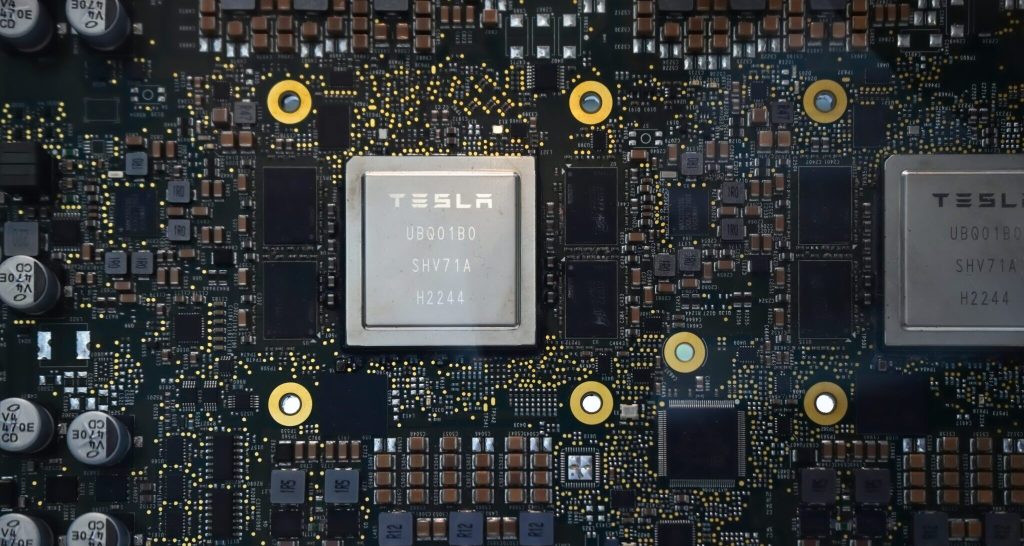
Tesla Chief Executive Elon Musk said on 19 March that the company may finalise the design of its next-generation AI6 chip—a process known as “tape-out”, wherein a completed design is submitted to a foundry for production—by December, “with some luck and acceleration using AI”. A Samsung executive confirmed the day prior that the company plans to begin producing Tesla chips via the 2nm process at its recently-opened plant in Texas during H2 2027.
The AI6 announcement, rather surprisingly, arrives ahead of the AI5, which Musk has described only as being in “good shape” and “almost done” without confirming it has reached tape-out. Tesla scrapped its Dojo supercomputer programme in August 2025, with Musk stating it no longer made sense to divide resources across two different chip architectures. Since then, the AI5 and AI6—along with subsequent generations—have been the focus of Tesla’s in-house silicon roadmap.
As it stands, the AI6 is destined for Samsung’s Texas facility under a US$16.5bn eight-year agreement announced in July 2025, Tesla’s largest single chip contract to date. The AI5 will be split between Samsung’s Texas site and TSMC’s Arizona plant, with Musk noting that Samsung’s facility carries slightly more advanced tooling than does TSMC’s. Both chips are designed primarily for inference workloads, processing large volumes of data in real-time inside Tesla vehicles and the planned Optimus robot. This contrasts with the large-scale training compute for which Tesla continues to rely on Nvidia.
The chip roadmap sits at the centre of Tesla’s broader pivot toward what Musk has described as “Physical AI”. The automaker has allocated US$20bn in capital expenditure for 2026 to fund the Terafab in-house fabrication project, alongside other non-electric vehicle projects like series production of the Cybercab robotaxi, and the Optimus humanoid robot. The facility is described as targeting a 2nm node with an initial capacity of 100,000 wafer starts per month, though no location, financing structure, or construction timeline has been disclosed.
The sequencing of the announcements fits Musk’s established pattern of conduct regarding forward guidance, publicly discussing AI6 tape-out timelines before AI5 has been confirmed complete. He is also describing Terafab ambitions—including allusions to eventually matching TSMC’s total global output—while the foundry whose chips the Terafab is meant to eventually replace is still the primary manufacturer of Tesla’s current generation. Jensen Huang has previously described replicating TSMC’s capabilities as “virtually impossible” for any new entrant, regardless of capital.
This pattern has not historically damaged Tesla’s valuation, but it does make it difficult to assess which elements of its ambitious pivot are genuinely on track, and which are aspirational framing to garner investor excitement. Musk said on 15 March that Terafab would launch by the end of the week.
Manufacturing,News,OEMs,Software-Defined Vehicle,Stewart Burnett,TeslaStewart Burnett,Tesla#Musk #eyes #December #AI6 #tapeout #AI5 #appears #unfinished1774015868
More Stories
Pony.ai, CATL partner on first L4 electric light truck
UK lays regulations for automated passenger services
Leapmotor reveals China-only B05 Ultra at Beijing show