
Elon Musk takes the rare step of urging measured expectations about his company’s robotaxi ambitions. By Stewart Burnett
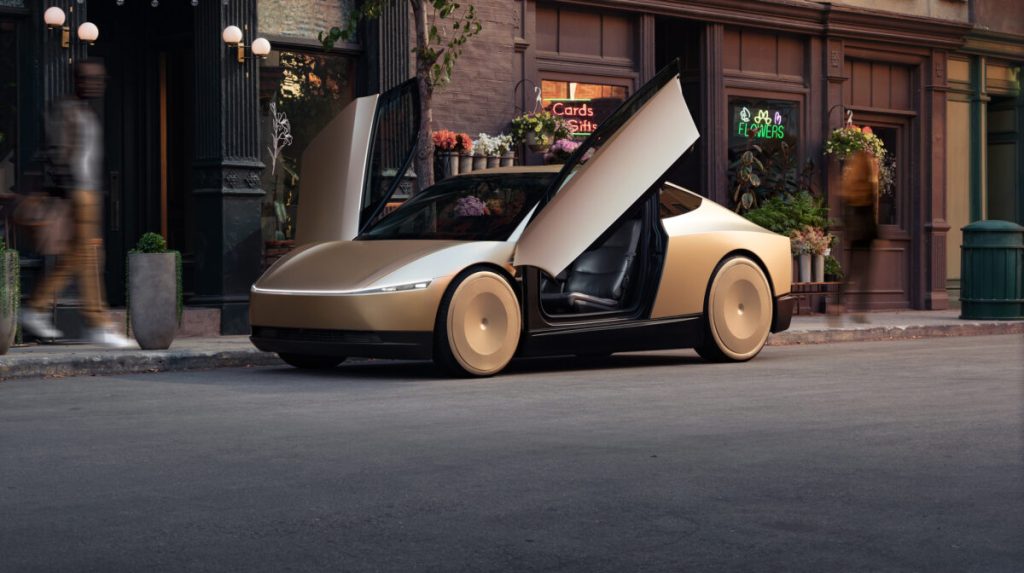
Tesla Chief Executive Elon Musk has taken the uncharacteristic step of urging measured expectations, stating that early production of the Cybercab robotaxi and Optimus humanoid robot will be “agonisingly slow” before eventually ramping up to higher volumes. In a 21 January post on X, Musk claimed that the initial manufacturing pace for both products will follow an S-curve pattern, with speed inversely proportional to the quantity of novel components and fabrication processes involved.
“For Cybercab and Optimus, almost everything is new, so the early production rate will be agonisingly slow, but eventually end up being insanely fast,” Musk said. His remarks came in response to a post noting that Cybercab production would begin within 100 days. Tesla previously indicated the two-seater Cybercab would reach volume production during 2026, with Optimus output “hopefully” commencing towards the end of the year.
Much of Tesla’s US$1.39tr market capitalisation is due to investor expectations for the automaker’s highly-vaunted autonomous driving technology and humanoid robotics, despite its core revenue and profit continuing to derive from car sales. In recent years Musk has tried to reframe the company as an AI and robotics company; in 2022 he characterised its ability to solve vehicle autonomy as “the difference between Tesla being worth a lot of money or worth basically zero”.
The Cybercab features no steering wheel, pedals or rearview mirrors, and serves as the first operational vehicle designed specifically for Tesla’s driverless taxi service. The lack of manual controls means it will face more stringent regulatory hurdles before it is approved for use on US roads.
Meanwhile, the automaker continues to struggle advancing its self-driving technology beyond SAE Level 2, with many analysts, insiders and subject matter experts pinning the blame on its adamant refusal to use non-camera sensors in its vehicle perception systems. Consumers have proven equally reticent; an August 2025 poll of US consumers found that half believe Tesla’s Full Self-Driving technology should be illegal, while 70% reject the company’s camera vision-only approach in favour of multi-sensor systems.
Tesla launched limited robotaxi operations in Austin, Texas during mid-2025 using Model Y units equipped with Full Self-Driving software rather than the purpose-built Cybercabs. The fleet has expanded to approximately 34 vehicles operating within geofenced areas that have been enlarged twice since launch, with early deployments including safety monitors seated in passenger positions. Musk reported in December that the company was testing robotaxis without safety officers present, describing the autonomous test ride as “perfect driving”.
The modified Model Y vehicles deployed in Austin incorporate hardware upgrades including self-cleaning cameras, redundant telecommunications units and GPS systems enabling constant contact with remote teleoperators who can assist if vehicles encounter difficulties. A Tesla engineer conceded in the weeks leading up to the launch that the service leans heavily on tele-ops.
News,Stewart Burnett,TeslaStewart Burnett,Tesla#Musk #early #Cybercab #output #agonisingly #slow1769010080
More Stories
Pony.ai, CATL partner on first L4 electric light truck
UK lays regulations for automated passenger services
Leapmotor reveals China-only B05 Ultra at Beijing show