




The views and opinions expressed by Lauren Fix are those of the author and do not necessarily reflect the views of CBT News.
Massachusetts lawmakers are once again at the center of a national debate over climate policy and personal mobility, and this time the issue hits close to home for anyone who relies on a car to live and work. Senate Bill 2246, formally titled the “Freedom to Move Act,” has advanced out of the Joint Committee on Telecommunications, Utilities, and Energy and is now headed to the Senate Ways and Means Committee. Supporters describe it as a forward-looking climate initiative. Critics see it as a step toward government-managed travel. Either way, the bill raises important questions about how far states should go in shaping how much, how often, and how freely people drive.
At its core, SB 2246 does not impose a direct limit on how many miles an individual can drive. There is no odometer check, no mileage cap per driver, and no new fines or taxes written into the bill. Instead, the legislation directs the state to set targets for reducing total vehicle miles traveled, commonly known as VMT, across Massachusetts. These targets would then be incorporated into transportation planning, infrastructure investment, and long-term emissions strategies.
Transportation is the largest source of greenhouse gas emissions in Massachusetts, as it is in many states. From that perspective, lawmakers argue the bill simply aligns transportation policy with existing climate mandates. The state already has legally binding emissions reduction goals, and supporters say it is impossible to meet those goals without addressing how much people drive. SB 2246, they argue, is about planning, not punishment, and about expanding alternatives rather than restricting choices.
Sign up for CBT News’ daily newsletter and get the latest industry stories delivered straight to your inbox.
The bill also establishes advisory councils and requires state agencies, including the Massachusetts Department of Transportation, to consider VMT reduction when developing projects and allocating funds. In theory, this means more emphasis on public transit, transit-oriented development, walking and biking infrastructure, and land-use policies designed to shorten commutes. Supporters emphasize that the legislation does not ban cars, restrict vehicle ownership, or mandate lifestyle changes. They say it simply provides a framework for giving residents more options.
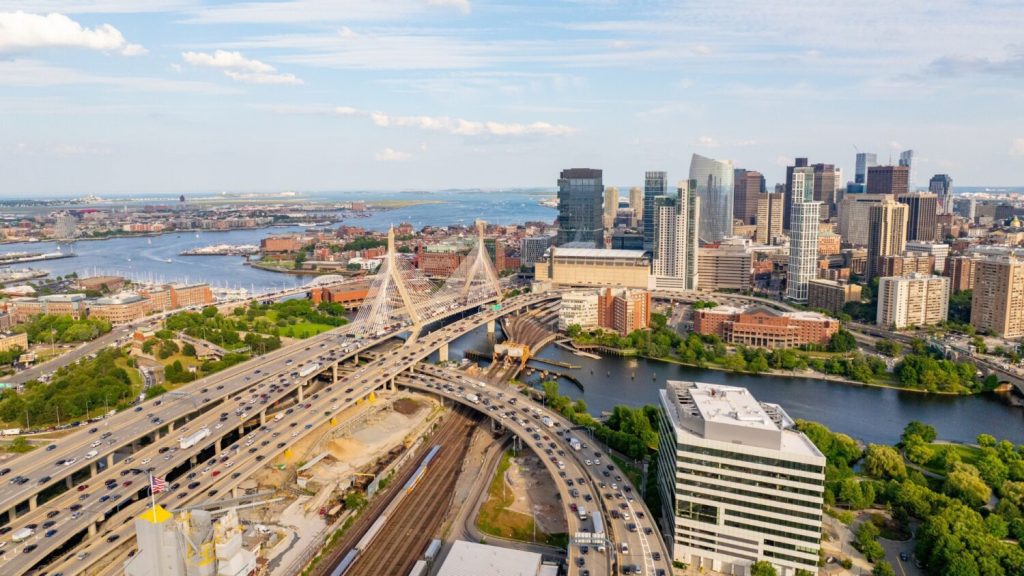
However, the practical implications deserve closer examination, particularly for residents outside the state’s urban core. In Greater Boston, where transit access is relatively dense, reducing car trips may be achievable for some commuters. In suburban and rural parts of the state, the reality is very different. Many residents drive long distances to work because there are no viable transit alternatives. Families juggle school, childcare, sports, medical appointments, and work across multiple towns. Small businesses depend on vehicles for deliveries, service calls, and daily operations. For these drivers, “driving less” is not a choice but a constraint imposed by geography and infrastructure.
Critics worry that while SB 2246 does not directly cap individual mileage today, it creates the policy foundation for future restrictions. Once statewide VMT reduction targets are established, pressure will mount to meet them. That pressure could influence everything from road funding and parking availability to congestion pricing, zoning decisions, and data collection on driving behavior. Even without explicit mandates, policy signals matter. When reducing driving becomes a formal state objective, personal mobility inevitably becomes a variable to be managed.
There is also the question of trust and execution. Massachusetts has struggled for years to maintain and modernize its public transportation system. The MBTA’s well-documented reliability issues have undermined confidence among riders and taxpayers alike. Promising expanded transit options while existing systems remain fragile leaves many residents skeptical that alternatives to driving will materialize quickly or equitably. Planning goals, no matter how well-intentioned, do not move people to work on time when trains are delayed or routes are unavailable.
From a policy standpoint, SB 2246 reflects a broader national trend. States and cities across the country are experimenting with VMT reduction as a climate strategy, encouraged by federal guidance and funding priorities. The concept is rooted in the idea that cleaner vehicles alone are not enough, and that total driving must decline to meet long-term emissions targets. Whether that assumption holds as vehicle technology evolves, including hybrids, plug-in hybrids, and increasingly efficient internal combustion engines, remains an open question.
The bill’s supporters argue that thoughtful planning today prevents more disruptive measures tomorrow. By gradually reshaping transportation and development patterns, they believe Massachusetts can reduce emissions without dramatic lifestyle changes. Opponents counter that history suggests incremental planning often leads to more intrusive policies down the road, especially when initial targets prove difficult to meet.
What makes SB 2246 particularly significant is not what it does immediately, but what it signals about the direction of transportation policy. It reframes driving not simply as a personal choice or economic necessity, but as a behavior the state has an interest in reducing. For some, that is a reasonable response to climate challenges. For others, it represents a shift away from the long-standing American principle that mobility equals opportunity.
As the bill moves to the Senate Ways and Means Committee, lawmakers will have to grapple with these trade-offs. Climate goals, economic realities, regional disparities, and personal freedom are all part of the equation. The debate should not be reduced to slogans or caricatures. It deserves a serious discussion about how policies designed in theory play out in daily life.
Massachusetts residents should pay close attention to this legislation, regardless of where they stand on climate policy. SB 2246 may not tell you how many miles you can drive today, but it helps define who gets to decide how transportation works tomorrow. In a state built on innovation and independence, that conversation matters more than ever.
Check out my full commentary on this story:
Looking for more automotive news? https://www.CarCoachReports.
Listen to The Drive Car Show – https://www.youtube.com/@
Industry News,Daily Automotive News,Articles,Car Coach Reports,Lauren Fix,automotive industry insights,automotive industry news,Auto News#Massachusetts #moves #limit #miles #people #drive #climate #change1770129522


More Stories
Weekly roundup: FTC wants dealers to report deceptive pricing, Ford boost U.S. assembly, Carvana expands dealership portfolio
Autonomous future back in focus as Waymo expands, Uber reinvests billions
New car sales drop 7.3% in April, but don’t blame buyers