
Dongfeng-Nissan comes under accusations of coordinating fake social media accounts to attack Li Auto’s core model lineup. By Stewart Burnett
China’s Ministry of Industry and Information Technology has summoned representatives from Li Auto and Dongfeng-Nissan after the former’s Chief Executive, Li Xiang, publicly accused the latter of orchestrating a coordinated online smear campaign against its core models. The dispute erupted on 11 April, days after Dongfeng-Nissan launched the NX8 SUV, when Li Xiang alleged that large volumes of similar posts with concentrated IP locations had emerged suddenly attacking Li Auto’s L6 and i6 models.
Li Auto’s legal team said it had completed preliminary evidence collection and filed the case with public security authorities, describing the alleged activity as organised manipulation with the goal of fabricating false public sentiment. Dongfeng-Nissan’s New Energy Vehicle Brand Head Wang Qian responded on Weibo, stating the company adheres to industry rules and advocates healthy competition, without directly addressing the specific allegation of coordinated troll activity. Regulators intervened the same day, with the ministry reportedly holding talks with both companies and continuing to monitor the matter.
The intensely competitive nature of China’s electric vehicle (EV) sector arguably justifies the legal intervention. Li Auto reported a 22.3% decline in revenue in 2025 to CN¥112.3bn (US$16.5bn) and an operating loss of CN¥521m, with deliveries down 18.81% year-on-year. This was due largely to market saturation diluting the performance of some of its more senior players (see also: BYD).
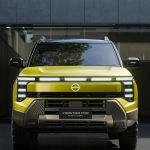
Li Auto’s recovery in early 2026 has been driven almost entirely by the i6, which accounted for more than 24,000 of the 41,000 units Li Auto delivered in March—effectively making the model’s reputation directly tied to the company’s survival. The Dongfeng-Nissan NX8, priced from CN¥149,900, enters the market at roughly CN¥100,000 below the i6, targeting adjacent buyers rather than direct substitutes but doing so during a period when the CN¥150,000–300,000 electric SUV segment is becoming the primary battleground in Chinese automotive.
Nissan’s position in China makes the confrontation equally charged from the other side. Dongfeng-Nissan recorded a year-on-year sales decline of more than 30% in the first two months of 2026, and the NX8—offered in both extended-range and battery-electric variants—is widely viewed internally as the model most critical to salvaging its regional position.
Those following the developments in China’s EV market may have noticed an unusual predisposition towards litigation among many of its major players. Indeed, several brands maintain dedicated legal department social media accounts that publicly post letters of intent to sue as deterrents. BYD, among the most aggressive, offers rewards of up to CN¥5m for evidence of coordinated smear campaigns against it.
Courts in Hangzhou and Beijing have established specialist internet divisions that are capable of moving faster than conventional civil proceedings. This has led to numerous major wins for local players: Huawei’s Maextro brand was awarded CN¥300,000 in damages against a blogger in February 2026; BYD secured a CN¥2.01m judgment against a critic in January. The legal infrastructure around brand protection has become a competitive instrument in its own right.
Whether that infrastructure serves consumers as well as it serves automakers is less clear. China’s Civil Code provides broad protection for corporate reputation rights, and in practice the burden of proof often sits with those making critical claims rather than those disputing them.
E-Mobility,Markets,News,OEMs,Nissan,Stewart BurnettNissan,Stewart Burnett#Auto #sues #DongfengNissan #alleged #smear #campaign1776252605
More Stories
Pony.ai, CATL partner on first L4 electric light truck
UK lays regulations for automated passenger services
Leapmotor reveals China-only B05 Ultra at Beijing show