

The widening gap between BYD’s subsidies and Toyota’s could be less a product of scoring criteria than the geopolitics surrounding them. By Stewart Burnett
Japan has cut purchase subsidies for BYD’s electric vehicles (EVs) by more than half to JP¥150,000 (US$936) under revisions taking effect in April, leaving the Chinese automaker significantly worse off than it was just weeks ago when it publicly declared it could not compete under the existing framework. The update widens an already substantial gap with Toyota, whose bZ4X retains the maximum subsidy of JP¥1.3m under a revised scheme that explicitly rewards domestic battery production.
The cut follows a March revision in which Japan’s Ministry of Economy, Trade and Industry raised the clean energy vehicle subsidy ceiling by JP¥400,000—a change from which BYD received no benefit. At the time, BYD Japan President Atsuki Tofukuji warned publicly that the company was at an “overwhelming disadvantage”, citing a gap of nearly JP¥1m between its models and Toyota’s. The April update deepens that gap further still.
The practical effect on the point of sale is stark. A BYD Atto 3, with a sticker price of around JP¥4.2m, nets down to roughly JP¥4.03m after subsidies. By contrast, the Toyota bZ4X, priced at approximately JP¥4.8m, reaches the consumer at around JP¥3.5m after subsidies. The nominally cheaper Chinese model ends up costing the buyer a great deal more.
Subsidies are determined by a 200-point scoring system that weights vehicle performance alongside a company evaluation covering charging infrastructure, maintenance networks, disaster response capability, and cybersecurity. BYD has scored zero points for charging infrastructure development despite installing fast chargers at dealerships nationwide. When Tofukuji asked METI to explain the score, the ministry said it could not disclose the reasoning and that officials were too busy to respond. “If the reason is just because we’re a Chinese manufacturer, then I want them to say so,” he told Nikkei at the time.
The January revision that raised the ceiling was very likely shaped in no small part by US-Japan trade discussions, and the results for US brands have been conspicuous. Tesla’s subsidy rose by JP¥400,000 to JP¥1.27m, a level analysts attribute partly to its Supercharger network satisfying the infrastructure criteria that BYD has failed to pass.
S&P Global Mobility analyst Yoshiaki Kawano noted that while the evaluation criteria had not formally changed, the revision had produced inconsistencies across manufacturers. “The change came after the US-Japan tariff negotiations, so it can’t be ruled out that some aspects could be perceived as favourable treatment from the government,” he said.
BYD has been running a parallel strategy to build consumer trust in Japan independent of the subsidy framework. Rather than competing head-on through price or volume, it has instead focused on what amounts to a localisation campaign: opening compact dealerships in neighbourhood malls and smaller regional towns rather than large out-of-town lots, targeting cities with populations less than 500,000 and concentrating on areas where kei car demand is strongest. The automaker had aimed for 100 outlets by end-2026 but reached only 69 across 38 prefectures, citing difficulties finding suitable properties.
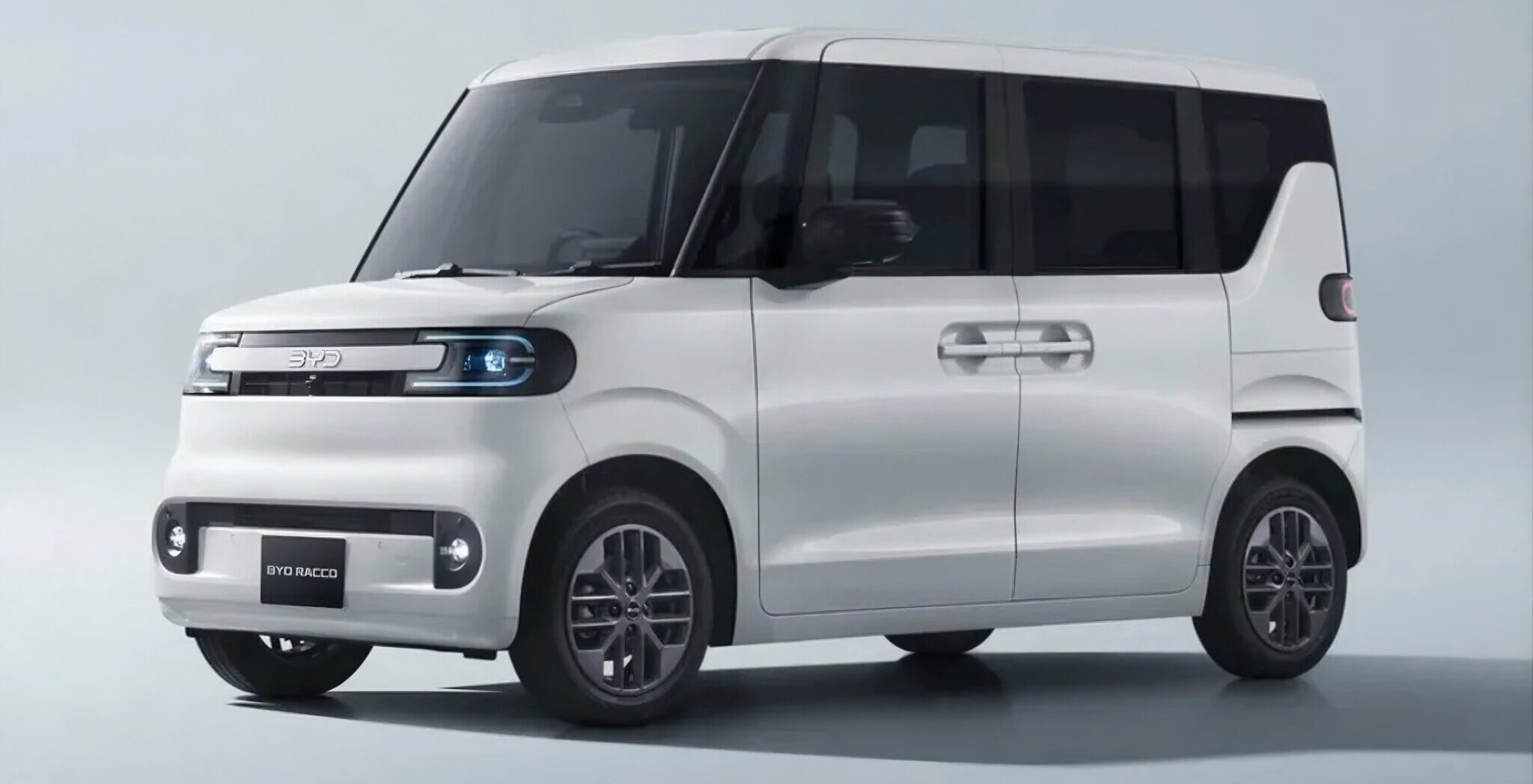
The centrepiece of that localisation effort is the Racco, a kei EV developed specifically for Japan and unveiled at the Japan Mobility Show in October 2025. The automaker’s first and only market-exclusive offering to date, it is expected to launch during summer 2026. Kei cars, capped at 3.4 metres in length and 64 horsepower, account for roughly 40% of Japan’s new vehicle sales and carry their own purchase tax advantages. BYD is pricing the Racco at around US$16,500, positioning it just below the segment’s incumbent electric leader, Nissan’s Sakura, before subsidies.
Whether the kei push can offset the subsidy disadvantage on BYD’s existing line-up is uncertain. The scoring system rewards the kind of embedded infrastructure and institutional presence that takes years to build, and the ministry’s opacity around BYD’s scores makes it difficult for the automaker to address its deficiencies directly.
E-Mobility,Markets,News,OEMs,BYD,Stewart BurnettBYD,Stewart Burnett#Japan #deepens #BYD #subsidy #gap #domestic #brands #gain1774879228
More Stories
Pony.ai, CATL partner on first L4 electric light truck
UK lays regulations for automated passenger services
Leapmotor reveals China-only B05 Ultra at Beijing show