




After a steady decline from being a foreign brand leader, Honda’s exit leaves Toyota as the only Japanese volume brand standing in South Korea. By Stewart Burnett
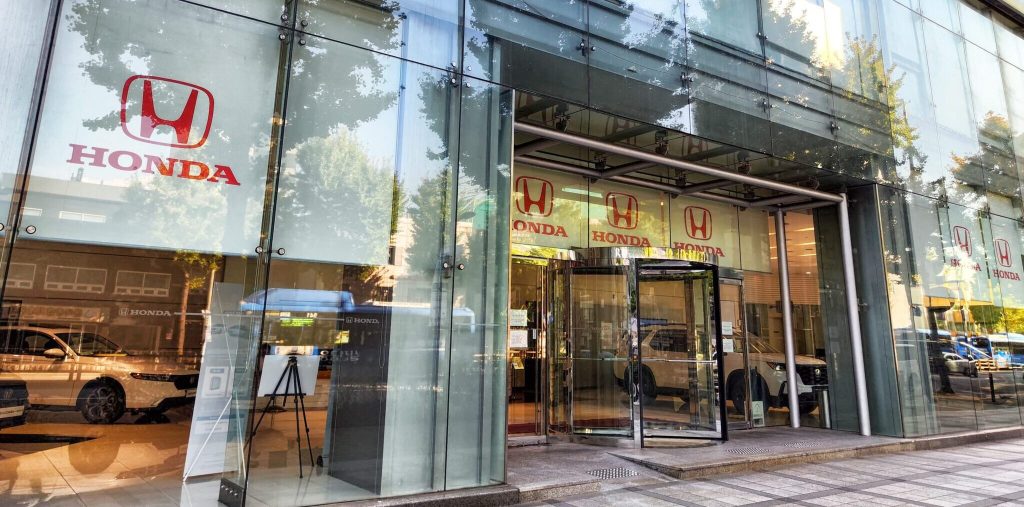
Honda confirmed on 23 April it will end new car sales in South Korea by the end of 2026, closing out a 23-year presence in the South Korean passenger car market. Regional Chief Executive Lee Ji-hong attributed the exit to a range of factors, among them shifting market conditions, exchange rate pressures, and the need to concentrate resources on priority areas.
After-sales support, parts supply, and warranty service will continue for at least eight years. The commercial reality underpinning the market exit is one of stark decline: Honda sold just 1,951 units in the Korean market during 2025, down 22% year-over-year and a staggering 85% decline from its 2008 peak of 12,356 units. That year, Honda was actually the first automaker to exceed 10,000 annual sales in Korea.
Its lineup at exit was limited to just four models: the Accord, CR-V, Odyssey, and Pilot, all of them imported from Honda’s Ohio plants. That US sourcing compounded the problem: a strengthening dollar against the Korean won eroded margins on every unit sold. However, intense competition from the dominant local brands was the determining factor.
Hyundai and Kia have dominated the domestic market with broad, well-priced lineups that have steadily improved in quality, while the import segment has shifted in favour of German premium brands and newer entrants—some of them from China. In just 11 months since its April 2025 market entry in Korea, BYD has also joined the ‘10,000 club’ with 10,075 units sold.
Honda also fell behind on electrification; it cancelled planned electric vehicle model development citing insufficient projected demand, leaving it without a credible response to a market where domestic players have built out extensive battery-electric and hybrid ranges. Nissan had already exited Korea in 2020; Honda’s departure leaves Toyota as the only one of Japan’s three largest domestic automakers still selling there.
Unfortunately for Honda, that context matters beyond Korea. Market exits by major manufacturers are relatively common in China, where domestic brands and regulatory pressure have displaced foreign players at an unforgiving pace. In Western (or Western-adjacent) developed markets, however, they are rarer and carry a different weight.
Honda leaving a G20 economy where it once had genuine momentum is a more pointed signal than a retreat from a frontier market. Kim Ki-chan, an emeritus professor at Catholic University, framed it directly: Japanese automakers “were not able to divert from their analog-based production system and they were unable to adapt to the change.”
Honda will retain its motorcycle business in Korea, where it entered in 2001, has sold more than 420,000 units cumulatively, and holds the leading market share. That outcome—dominant in two wheels, departing in four—mirrors the logic of Suzuki’s 2012 exit from the US market, which followed a similar path of sustained losses in passenger vehicles while remaining profitable in a narrower lane.
Markets,News,OEMs,Honda,Stewart BurnettHonda,Stewart Burnett#Honda #exit #South #Korean #car #market #years1776969703



More Stories
Pony.ai, CATL partner on first L4 electric light truck
UK lays regulations for automated passenger services
Leapmotor reveals China-only B05 Ultra at Beijing show