



Battery development could get a whole lot faster and cheaper with a new R&D and production toolset. By Megan Lampinen
Chinese players have taken the lead in the electric vehicle (EV) transition, but could an infusion of new R&D tools help the West play catch-up? That’s the suggestion from Holyvolt and Wildcat Discovery Technologies, two technology companies that are coming together to disrupt EV battery development. The former acquired the latter in March 2026 for US$73m.
“The West must accelerate the development of next-generation battery technologies to secure long-term energy independence,” asserted Magnus Tyreman, Chairman of Holyvolt and former Head of McKinsey Europe. “The acquisition of Wildcat strengthens our ability to advance that mission.”
End-to-end capabilities
Holyvolt is a start-up headed by Swedish entrepreneur Mathias Ingvarsson and is all about improving battery production methods. Founded in 2022, it has developed a rapid, low-cost screen-printing process to make anodes, cathodes and solar cells, with its cathode production also incorporating a proprietary water-based technology. Specific details are scarce, but the potential is big. “I don’t like to say ‘cheap’ because that might imply poor quality, but this is economically very disruptive,” Ingvarsson asserts. “It’s less complex than traditional processes and very fast, which reduces energy use, cost and environmental footprint.”
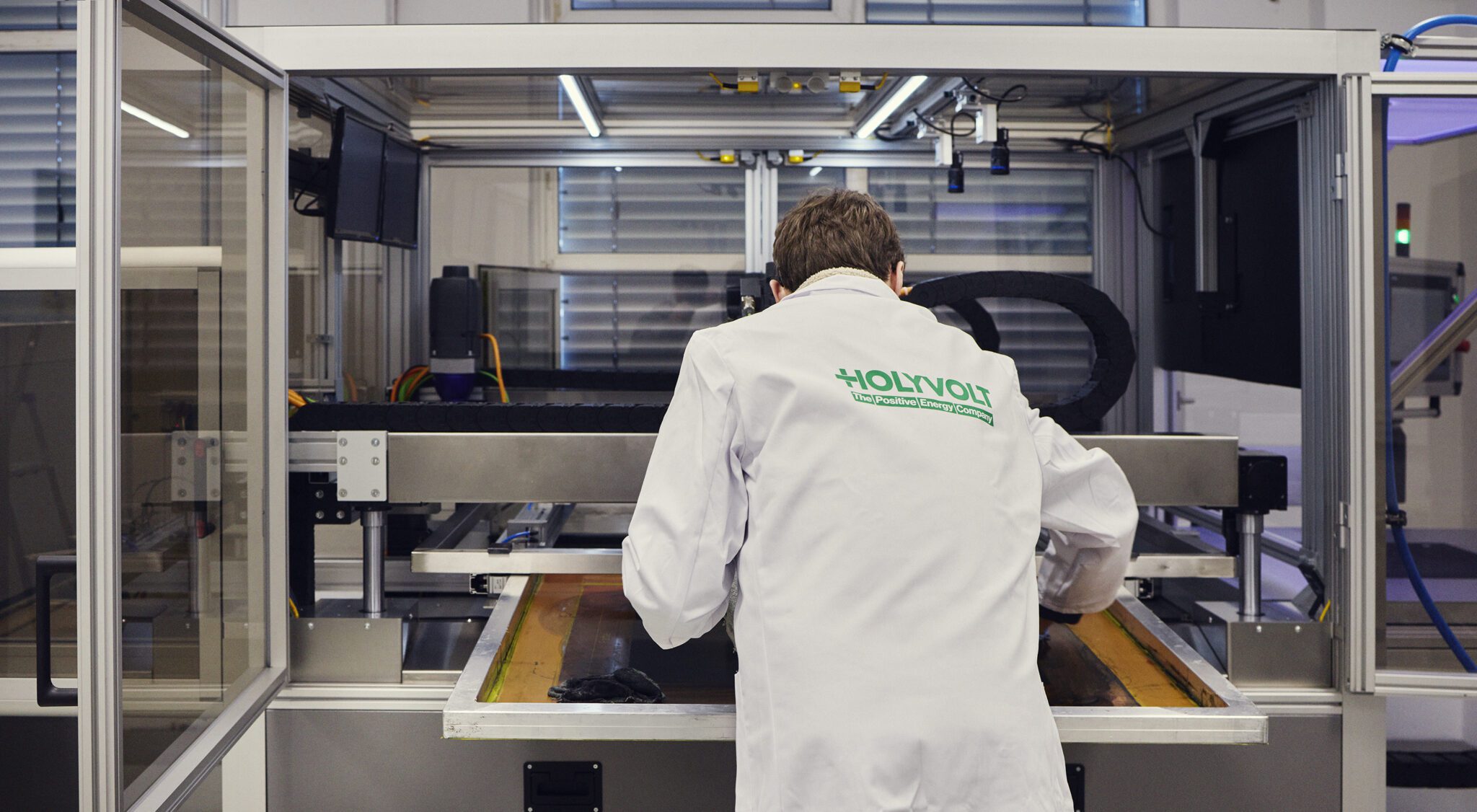
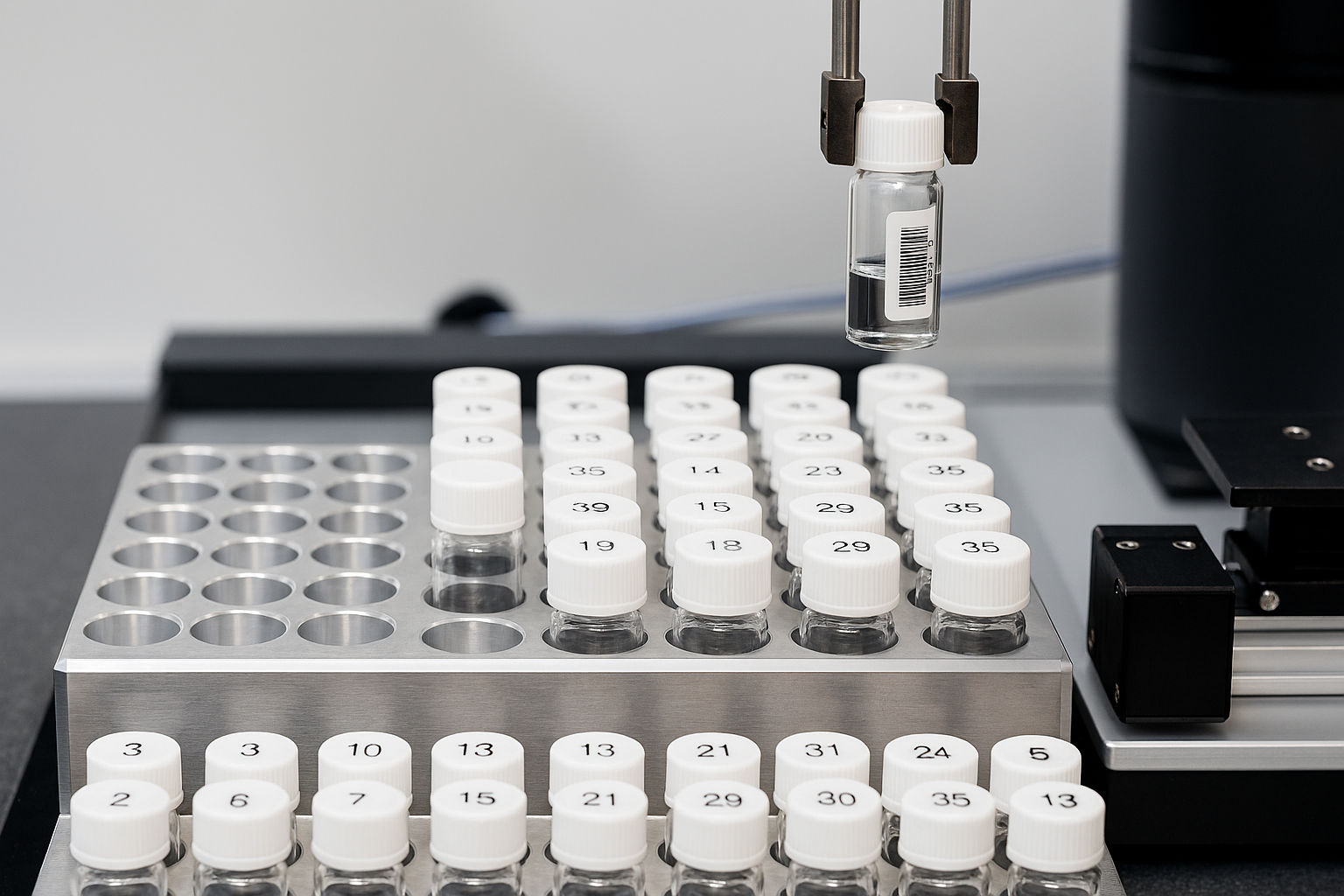
California-based Wildcat caught Ingvarsson’s eye. It specialises in a research technique called high-throughput combinatorial chemistry, first applied to drug discovery but which Wildcat is now using to help cell makers and automotive manufacturers improve battery materials. Instead of conducting a single experiment, evaluating results, and then repeating, high throughput combinatorial chemistry allows teams to conduct thousands of experiments in parallel, each with a different material set.
“We’re making materials and batteries, and then cycling them and receiving huge amounts of data that then can be used for computational work,” says Chief Executive Mark Gresser. “It’s a low-cost, efficient and rapid way to do many experiments.” The company claims its discovery methods are up to ten times faster than conventional methods. “It’s almost impossible to evaluate in a timely way all the many materials that are available to cell makers or automakers,” he adds. “The number of combinations of materials is almost infinite. A tool like combinatorial high-throughput allows you to make sense of all that very rapidly.”
Together, the two players could offer a powerful value proposition that runs from molecular discovery to pilot production. “We started working with Wildcat on R&D and it worked so beautifully for our process method that we decided to merge the companies,” Ingvarsson tells Automotive World.
The merged operations bring together a team of 30 Holyvolt engineers in Munich, Germany and 55 Wildcat employees in San Diego. Ingvarsson includes Stockholm in the list of global locations, though its role is more around managing the funding and acquiring partners. “Sweden has a lot of good capital and experienced investors willing to see if there are any more Spotifys out there,” he notes. “The country is one of the world’s leading unicorn producers per capita.”
Industry impact
The plan is to combine innovative process and material science expertise into a “super platform” to allow for the rapid and cost-efficient production of new batteries for a range of industries, including automotive. In addition, Wildcat has been working on a new high-energy cathode technology called DRX, featuring no nickel or cobalt. Gresser anticipates it could have the potential to be “very disruptive” to automotive. The company is currently in talks with various automakers on this, but does not intend to build the materials or batteries itself. Production capabilities are strictly pilot scale, allowing for technology demos. “Maybe we partner with a big cathode maker, a cell maker, or a major OEM,” he surmises. “We’ll leave that open for now.”
For all project areas, the idea is to work closely with every automotive customer to tweak the technology for their specific application. BMW is one of the few automakers that has gone public about its work with Wildcat, and the two have partnered for more than a decade. Other relationships remain confidential, but Gresser claims to be “working with most major automakers.”
The capabilities on offer could prove a real competitive advantage, particularly for western OEMs struggling to catch up to China’s EV lead. Highlighting the impact of high-throughput combinatorial chemistry in particular, Gresser emphasises: “Asian cell makers may have 1,000 or 2,000 R&D team members doing experiments. This is one way to compete with that while having a much smaller team.”
One byproduct of the massive experimentation that Wildcat does is the accumulation of vast amounts of data. “After more than 18 years, we probably have more data across battery and battery materials than anyone in the world,” he claims. “That’s pretty useful for AI and further improving batteries.” The company is currently exploring how best to harness this data asset moving forward.
As far as competition goes, Gresser claims there is none: “We’re not competing with anybody. We partner with the whole supply chain, serving as an extension of their R&D capabilities or bringing new products and processes.”
Bringing together advanced materials development and scalable manufacturing technologies in a single platform could indeed accelerate the evolution of battery technology from lab to production. While it’s early days, Ingvarsson emphasises the wide-ranging impact potential on all battery hopefuls, noting: “We are not working on a product that could fail but rather a tech stack that becomes an enabler for the whole industry.”
Articles,E-Mobility,Megan LampinenMegan Lampinen#Holyvolts #Wildcat #acquisition #tackles #Wests #battery #lag1774852229
More Stories
Pony.ai, CATL partner on first L4 electric light truck
UK lays regulations for automated passenger services
Leapmotor reveals China-only B05 Ultra at Beijing show