
Hesai is leading the charge on affordable LiDAR, with US$200 units that best the US$75,000 counterparts on the market a decade ago. By Stewart Burnett
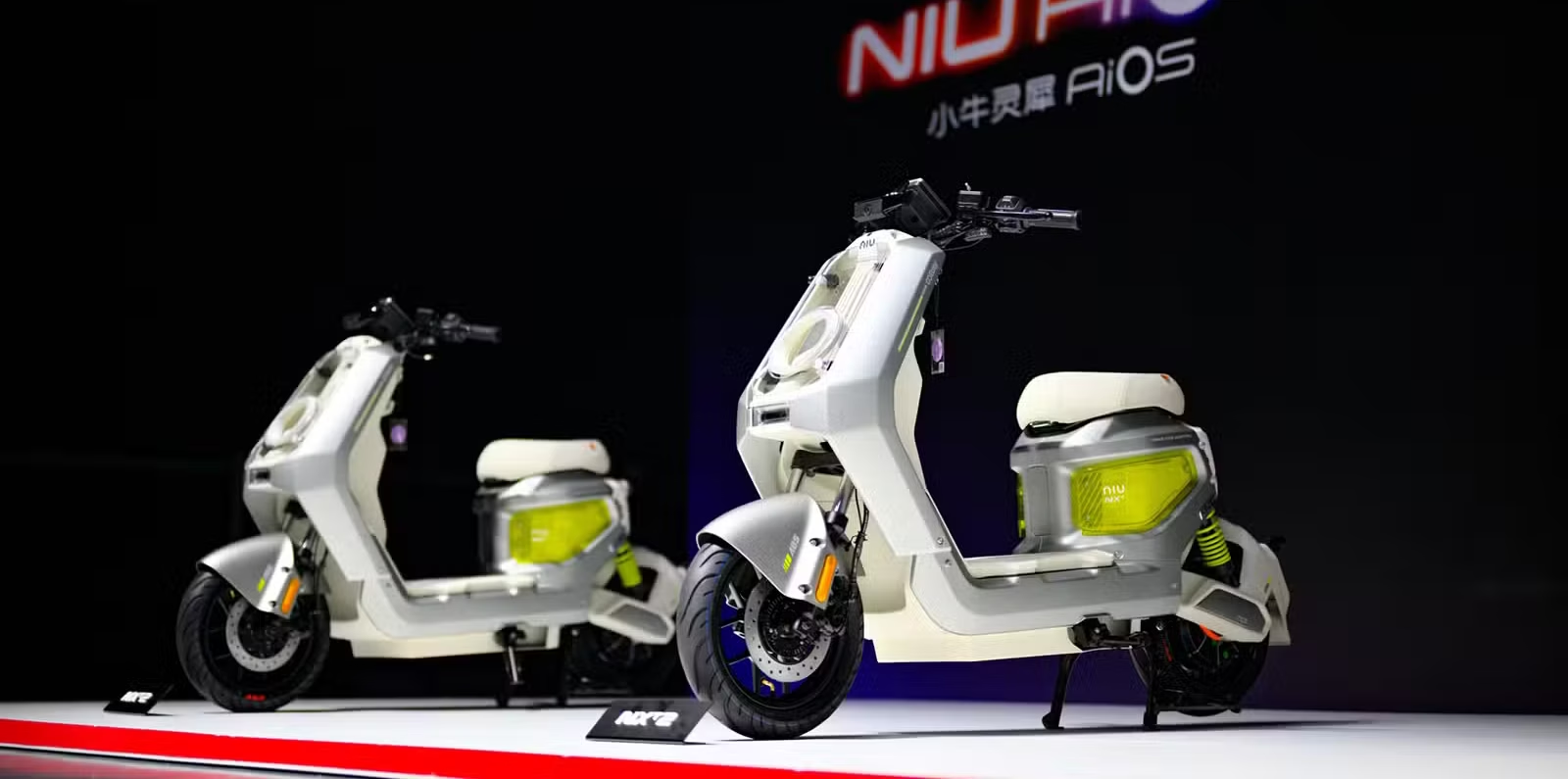
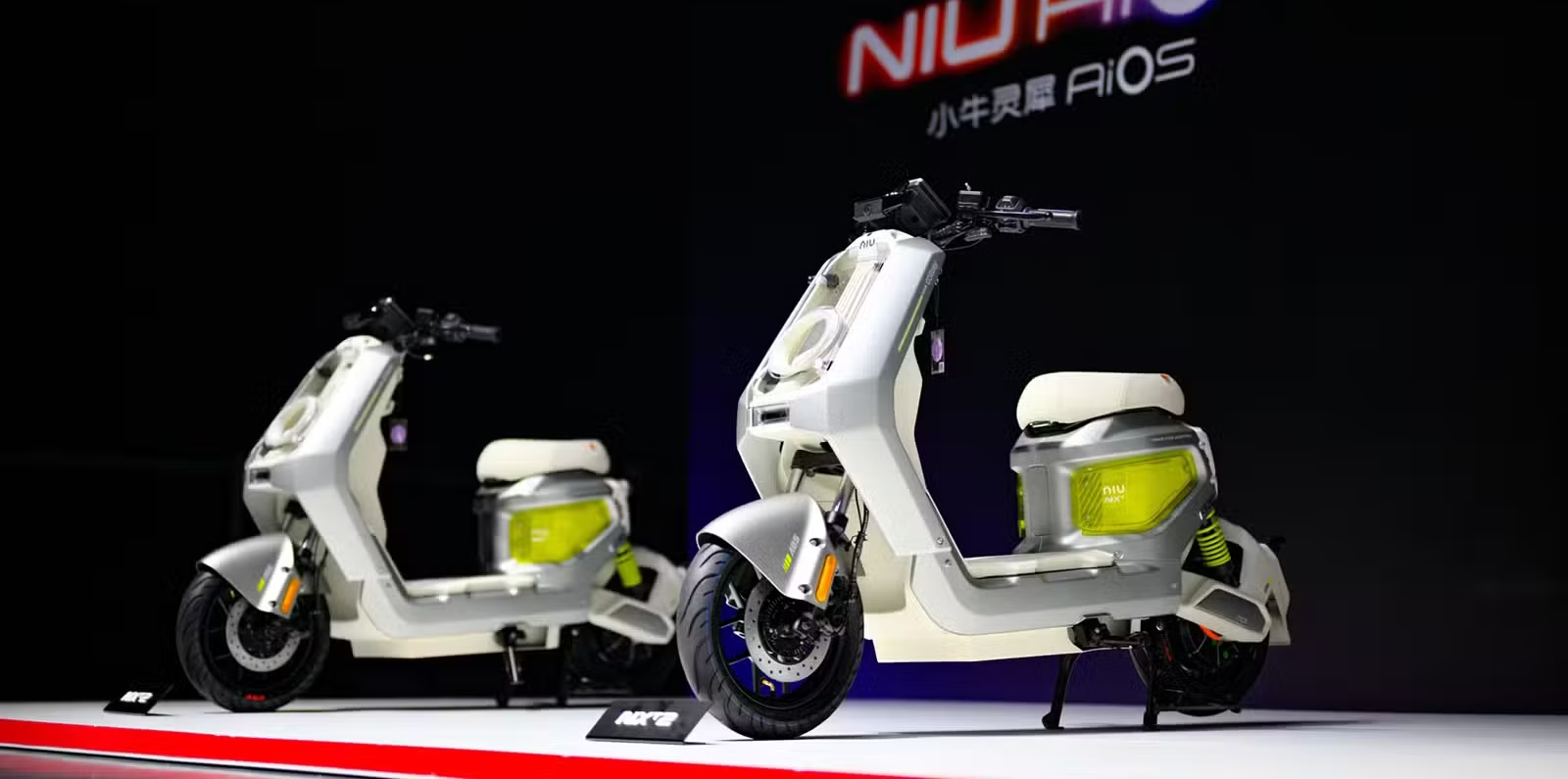
Fast-rising Chinese LiDAR maker Hesai has partnered with electric two-wheeler brand Niu Technologies to supply its FTX blind-spot sensor for the bikemaker’s newly-released NXT2 scooter. The development appears to represent a tipping point in the affordability of LiDAR technology, which continues to be dismissed by some automakers as prohibitively expensive despite its robust detection capabilities.
Not long ago, such a partnership would have been commercially implausible. Hesai says it has reduced the unit cost of LiDAR from more than US$50,000 ten years ago to approximately US$200 through chip integration and mass production. The technology has historically been associated with high-end passenger electric vehicles and autonomous vehicle programmes, but its penetration rate in the overall Chinese passenger car market reached 19% by the end of 2025, crossing what the company has characterised as the threshold for large-scale adoption.
In a statement, Niu Chief Executive Li Yan said a single perception solution can no longer meet the demands of increasingly complex urban traffic, framing LiDAR as a necessary step rather than a premium addition. The FTX—which is not Hesai’s most advanced offering—offers a maximum field of view of 180°×140°, enabling all-weather detection of pedestrians, vehicles, and road hazards in dense urban environments.
The spread into two-wheelers is the logical next step in the trajectory towards mass-market affordability, and arguably the most symbolic. The current-generation NXT represents Niu’s take on the mass-market e-scooter, with sticker prices starting at CN¥10,000 (US$1,450). It is a far cry with the premium-segment SUVs more commonly associated with LiDAR integration, particularly outside China.
Things have been moving in this direction for a while, but in 2026 the pace appears to be ramping up. BYD filed for a LiDAR option on its US$10,000 Seagull city car in January, and Leapmotor filed for LiDAR on its A05 compact EV earlier this month.
Hesai’s longer-range sensors are used by a significant share of the world’s leading SAE Level 4 robotaxi programmes, including those operated by Baidu, Pony.ai, WeRide, and Zoox. The ability to serve both a US$200 blind-spot sensor on an urban scooter and the primary sensing suite of driverless commercial platforms reflects the breadth of the manufacturing scale it has been able to achieve in a short period of time—and the degree to which that scale has decoupled performance from price.
Western LiDAR producers, including Luminar and Valeo, have largely pursued a different strategy, essentially targeting high-specification automotive partnerships at higher price points. That approach arguably made sense when sensor costs were prohibitive for volume applications, but the gap is narrowing rapidly. At US$200 per unit, LiDAR is approaching the cost territory of advanced camera systems, and the volume advantage Chinese producers have built through passenger car and now two-wheeler adoption is compounding.
Hesai recently raised US$531m in an initial public offering in the Hong Kong stock exchange, and has indicated it plans to use these funds to expand its production lines not just domestically but worldwide. It has indicated it will double its production capacity to more than four million units annually in 2026.
Holdouts on LiDAR integration include domestic automakers like Xpeng, but the most prominent sceptic is without a doubt Tesla Chief Executive Elon Musk, who maintains into 2026 that the only way to realise autonomous driving at massive scales is through a camera vision-only approach. Musk has clung to this perspective even as per-unit LiDAR prices fell to little more than 1% of their cost a decade ago, and in spite of the appreciably higher-than-average accident rates recorded by his company’s robotaxi pilot in Austin.
Autonomous Driving,Manufacturing,Markets,News,Software-Defined Vehicle,Stewart BurnettStewart Burnett#Hesai #brings #LiDAR #escooters #perunit #costs #plummet1773834764
More Stories
Pony.ai, CATL partner on first L4 electric light truck
UK lays regulations for automated passenger services
Leapmotor reveals China-only B05 Ultra at Beijing show