




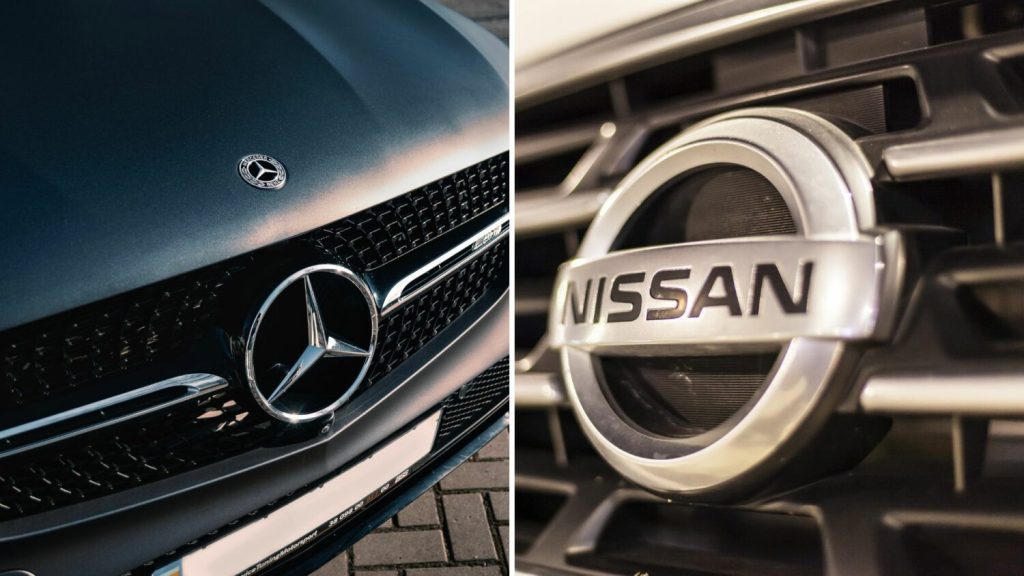
Nissan narrows full-year loss forecast amid cost-cutting, while Mercedes-Benz posts steep profit decline, both signaling cautious outlooks for 2026
On the Dash:
- Nissan’s upcoming Rogue plug-in hybrid and refreshed lineup highlight how critical strong product cadence will be for driving showroom traffic in 2026.
- Tariff-related costs are materially impacting global automaker profitability, reinforcing continued pricing pressure and margin sensitivity for dealers.
- Ongoing restructuring and cost-cutting efforts at Nissan and Mercedes-Benz could influence vehicle allocation, production timing, and future incentive strategies.
Nissan and the Mercedes-Benz Group both reported challenging financial results this week, highlighting the ongoing pressures global automakers face from tariffs, competition, and shifting market demand.
Nissan said Thursday it now expects an operating loss of ¥60 billion yen ($392 million) for its fiscal year ending March 2026, a notable improvement from its previous forecast of a ¥275 billion shortfall. The automaker also projected a net loss of ¥650 billion and net sales of ¥11.9 trillion.
CEO Ivan Espinosa credited progress to ongoing cost-cutting measures, including 20,000 job reductions, seven factory closures, and more than ¥80 billion in fixed-cost savings in the first half of the fiscal year.
Sign up for CBT News’ daily newsletter and get the latest industry stories delivered straight to your inbox.
Despite these efforts, Nissan continues to face headwinds from declining sales in China and the U.S., where 15% tariffs on imported Japanese vehicles and parts remain in effect. Therefore, Espinosa is relying on a refreshed lineup, including a facelifted Leaf EV, updated Kei mini-cars, and an all-new Sentra sedan in the U.S., along with a plug-in hybrid option for the Rogue SUV expected early this year. However, analysts noted that while Nissan’s cost discipline is helping to stabilize the company, the recovery still depends heavily on operational efficiency rather than underlying demand growth.
Meanwhile, Mercedes-Benz reported a steep 57% drop in full-year operating profit, posting €5.8 billion ($6.9 billion) for 2025, down from €13.5 billion a year earlier. The result fell short of analyst expectations of €6.6 billion and reflected foreign exchange headwinds, intense competition in China, and roughly €1 billion ($1.2 billion) in tariff-related costs.
Chairman Ola Källenius said the company maintained efficiency and operational flexibility to navigate a dynamic market environment, but also warned of continued challenges ahead.
Looking toward 2026, Mercedes-Benz plans additional cost cuts and a burst of product launches, targeting an adjusted return on sales of 3% to 5%, slightly below 2025 levels. Revenue is expected to remain consistent with the prior year, while the Group’s EBIT is projected to be significantly higher. Free cash flow for the industrial business is expected to be slightly below 2025’s €5.4 billion.
For dealers, the results underscore key considerations for the year ahead. Nissan’s refreshed vehicles, including the upcoming Rogue plug-in hybrid, highlight the importance of product cadence in attracting showroom traffic. Tariff-related costs affecting both automakers emphasize ongoing pricing pressures and margin sensitivities in the global market. Finally, continued cost-cutting and restructuring at Nissan and Mercedes-Benz could influence vehicle allocation, production timing, and future incentive strategies, requiring dealers to remain agile in managing inventory and sales plans.
Articles,Headlines,profit earnings,Merced-Benz Group,automotive tariffs,economic impact,Trump’s Tariffs,Nissan,car business,Retail Automotive,auto industry#Global #auto #market #challenges #mount #Nissan #trims #losses #MercedesBenz #earnings #fall1770913947



More Stories
Weekly roundup: FTC wants dealers to report deceptive pricing, Ford boost U.S. assembly, Carvana expands dealership portfolio
Autonomous future back in focus as Waymo expands, Uber reinvests billions
New car sales drop 7.3% in April, but don’t blame buyers