




While the Iran conflict is driving up fuel prices, it’s also impacting the cost of living and creating economic uncertainty. By Megan Lampinen
The war in Iran is boosting fuel prices for drivers around the world, but is it enough of a hike to push consumers into electric vehicles (EVs)? While at first glance the situation might indeed appear to be a huge tailwind, the impact may be decidedly muted.
The immediate fallout for drivers is clear: pump prices are going up. If oil remains at US$100 a barrel, as recorded on 16 March, drivers of gasoline vehicles in the EU will pay €55bn (US$63.5bn) more over the course of a year, according to estimates from Transport & Environment (T&E). For UK drivers, the Energy and Climate Intelligence Unit (ECIU) warns that a prolonged oil price of US$100 a barrel could add £140 (US$187) in yearly costs for drivers travelling 8,000 miles a year. For the US, BloombergNEF estimates that on a national level, drivers would pay an additional US$1.65bn if prices remain elevated.
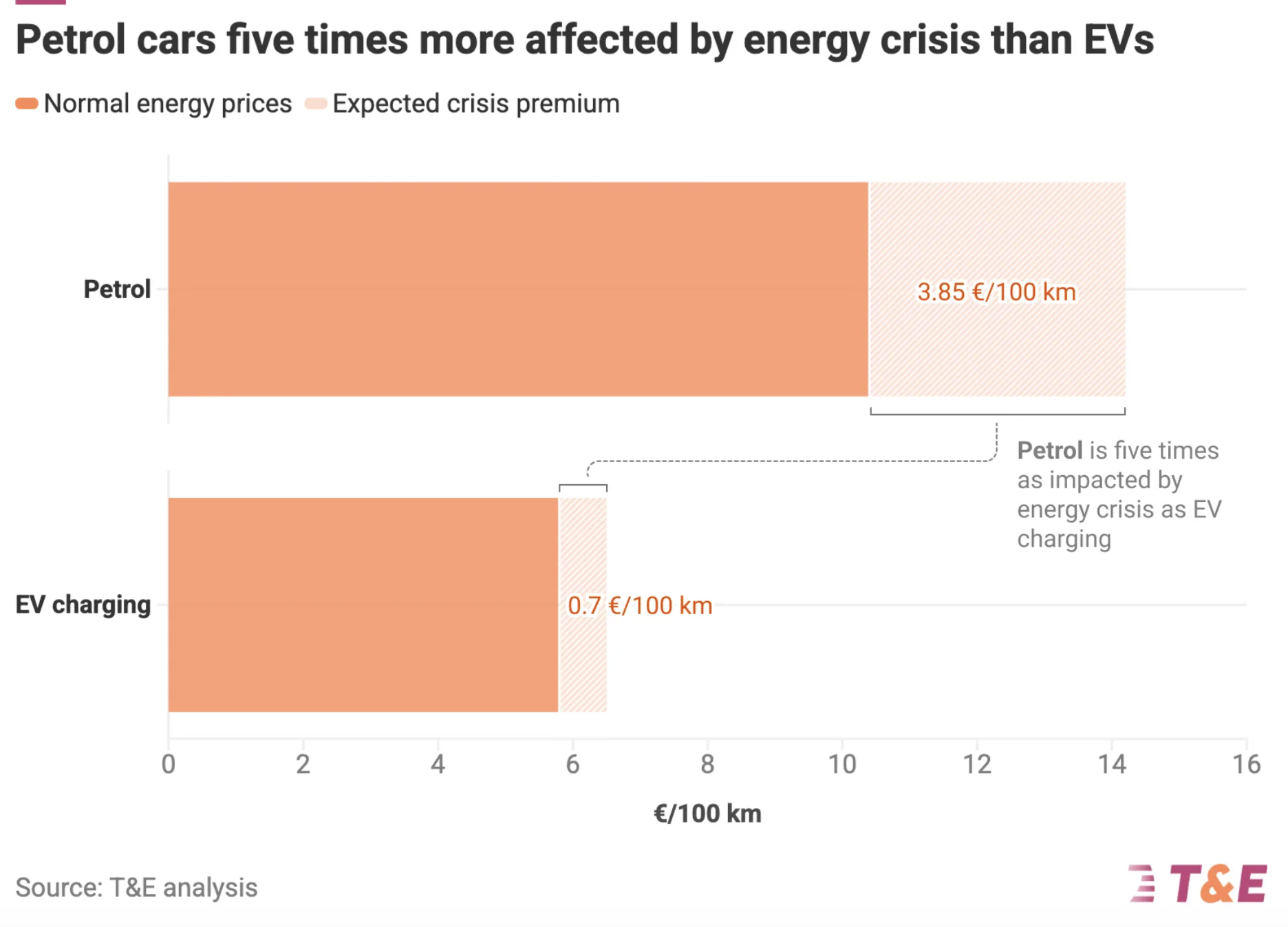
EVs are not immune, though the impact is much more muted, and charging cost increases will vary depending on where the charging energy comes from. T&E estimates that the looming energy crisis will add a €38 premium to the monthly costs of gasoline cars and a €7 premium to EVs. For higher mileage corporate fleet vehicles, the crisis premiums jump to €89 for gasoline and €16 for EVs.
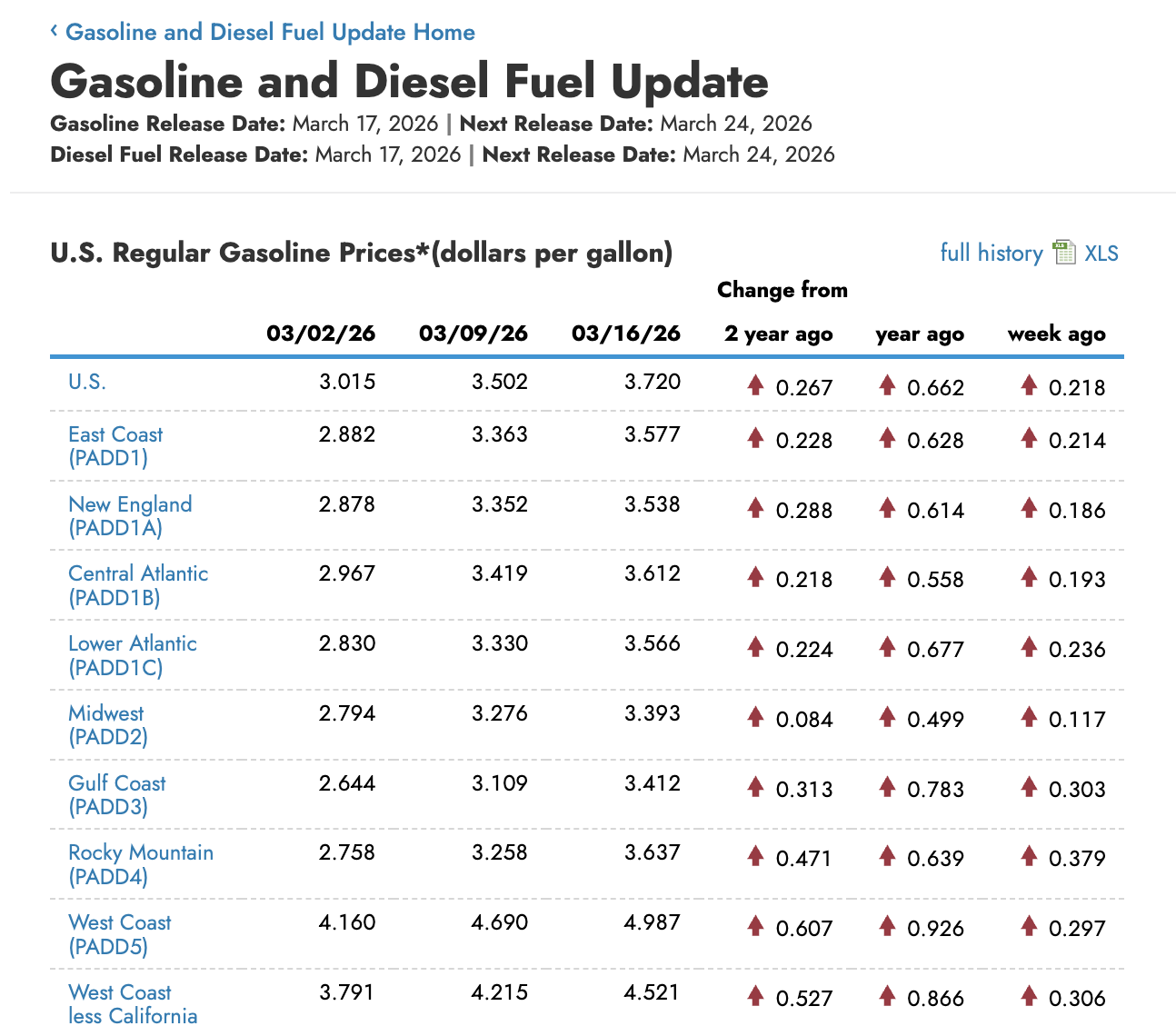
In the US, the sweet spot for converting buyers to electric could be when gasoline hits US$4 a gallon. That’s what Steven Cegelka, Chief Operating Officer of car dealership consultancy Ignition Dealer Services, told Bloomberg. Fuel prices can vary widely by state, but some parts of the country are not far off.
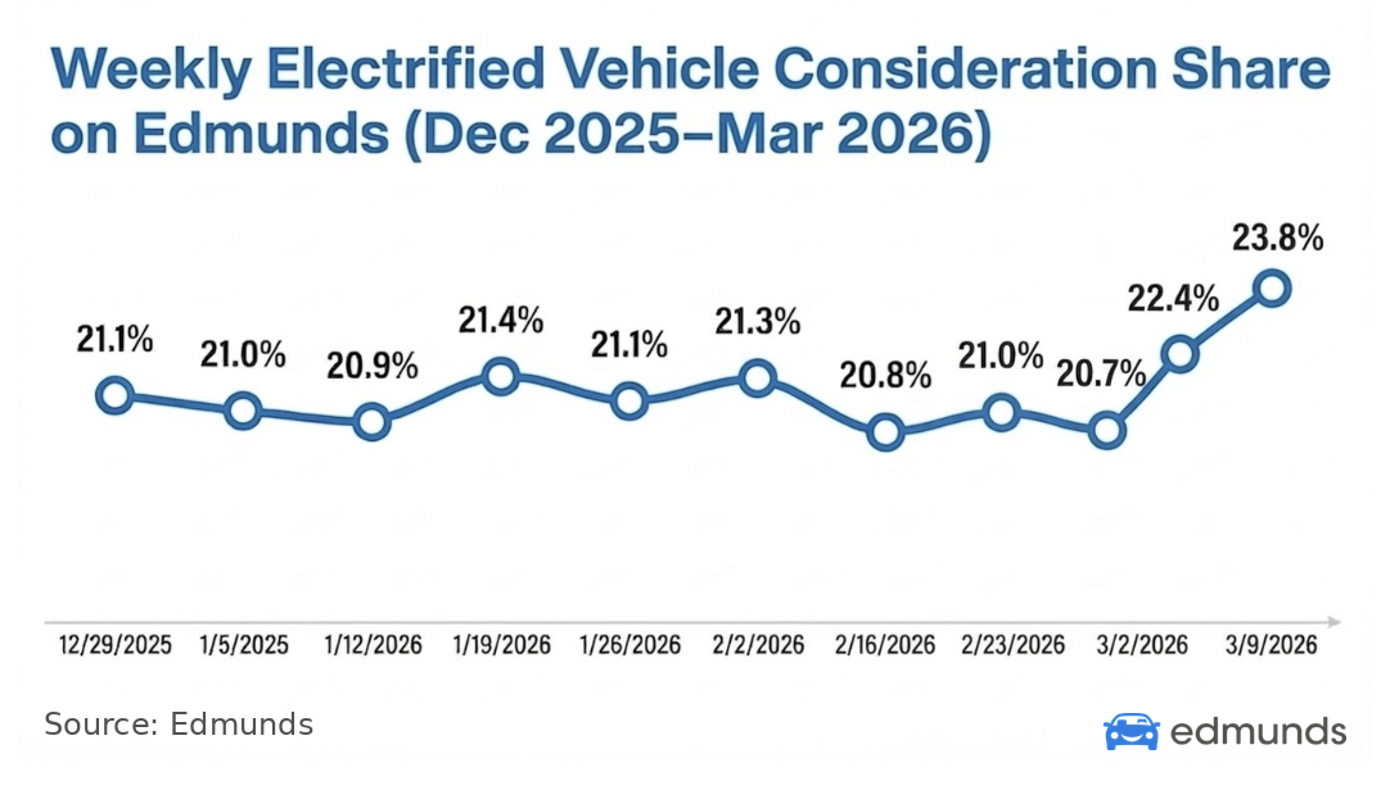
It’s not surprising that many buyers are at least starting to explore EV options. The most recent Edmunds.com data from the week of 9-15 March shows that shopper consideration across all sorts of electrified vehicles (including hybrids, plug-in hybrids and EVs) accounted for 23.8% of all vehicle research activity on the Edmunds.com website, up from 22.4% the previous week and the highest weekly level seen so far in 2026.
That’s just one website, and Edmunds analysts concede that it would be premature to interpret this as confirmation of any significant change in purchasing behaviour, but the data suggests that gas price volatility may be nudging more shoppers to explore electrified options. In light of the Trump Administration’s move away from any sort of green transport agenda, the current situation is unlikely to create an EV wave in the US. It’s worth noting that the country’s EV market share slipped to 6% in February 2026, down 1.6pts from the previous year.
Jessica Caldwell, Edmunds’ head of insights, notes how “electrified vehicle shopping interest appears to be edging upward as drivers look for ways to reduce exposure to fuel costs. But affordability remains a major hurdle. Leasing has historically helped make battery EVs (BEVs) more accessible to consumers, but it has slowed in recent months.” In February 2026, following the end of the federal tax credit in September 2025, BEV lease penetration fell to its lowest level since June 2023.
Automakers themselves are not expecting much in terms of a market turnaround. “Over the past few decades, whenever there was a military conflict, it sent energy prices spiking,” observed Martin Sander, Member of the Board of Management for Sales, Marketing and After Sales at Volkswagen Passenger Cars, speaking at a UK media event. “But then they would come down again to a realistic level. I don’t believe this will change the cost of ownership in the long run. The prices at the pump may make some consumers think twice about an EV, but I don’t see this as sustainably changing the playing field.”
Nicole Shaw, Managing Director at Volvo Car UK, warned that the uncertainty of the situation may simply put consumers off making any big purchase entirely: “If the cost of living is going up, consumers see it as another reason not to buy that new car just now.”
Mike Hawes, Chief Executive of the UK’s Society of Motor Manufacturers and Traders, highlighted the impact on interest rates and inflation and how they will spill over into consumer confidence. “The cost of fuel is always a concern because it flows through to economic and consumer confidence,” he said. “A rapid increase in price just breeds uncertainty. We don’t know the underlying long-term effect… [but] if the whole economic situation deteriorates, it won’t help the industry sell more EVs.”
Articles,E-Mobility,Markets,Geely,Megan Lampinen,Volkswagen GroupGeely,Megan Lampinen,Volkswagen Group#Fuel #price #volatility #nudge #interest #propel #sales1773905296

More Stories
Pony.ai, CATL partner on first L4 electric light truck
UK lays regulations for automated passenger services
Leapmotor reveals China-only B05 Ultra at Beijing show