


On the Dash:
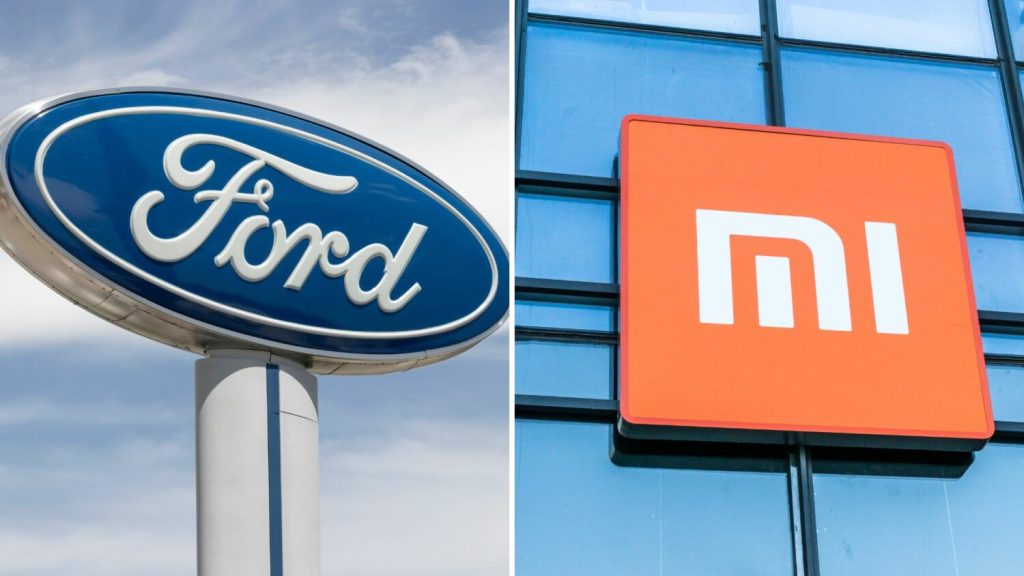
- Ford and Xiaomi both denied a report claiming that preliminary talks were underway for a U.S.-based EV joint venture.
- Chinese EV makers continue expanding in North America despite high U.S. tariffs and political scrutiny.
- Ford’s denial comes as automakers scale back EV investments amid slowing demand and policy headwinds.
Ford Motor Co. has held preliminary discussions with Chinese electric vehicle maker Xiaomi regarding a potential joint venture to produce EVs in the United States, the Financial Times reported on Saturday, citing people familiar with the matter. Such a partnership could create a pathway for Chinese automakers to enter the U.S. market.
Both companies quickly denied the report. A Xiaomi spokesperson said the claim was false, adding that “Xiaomi does not sell its products and services in the United States and is not negotiating to do so.” Ford Chief Communications Officer Mark Truby also refuted the report, posting on X, “This story is completely false. There is no truth to it.”
Sign up for CBT News’ daily newsletter and get the latest industry stories delivered straight to your inbox.
The Financial Times also reported that the U.S. automaker has held discussions with BYD and other Chinese EV makers. Ford CEO Jim Farley has previously spoken favorably about Chinese automakers, praising their rapid growth and advanced software capabilities. He also admitted on the Everything Electric Show podcast that he owns and drives a Xiaomi SU7.
Chinese EVs are already gaining traction in North America, particularly in Mexico, where hundreds of thousands of vehicles have entered the market. Chinese EV maker BYD accounted for 70% of electric and plug-in hybrid sales in Mexico, according to Bloomberg estimates. In Canada, a recent agreement enacted on Jan. 16 allows up to 49,000 Chinese EVs to enter the country annually at a reduced 6.1% tariff rate.
A partnership with a U.S. automaker could help Chinese EV manufacturers overcome trade barriers and gain access to the American market. On Jan. 13, speaking at the Detroit Economic Club, President Trump said that Chinese automakers would be welcome to operate in the United States, provided they build factories and create local jobs. However, his administration will maintain steep tariffs on imported Chinese EVs.
The growing competition with Chinese rivals is also adding pressure on legacy automakers, with many struggling to compete with lower-cost Chinese rivals. Many have also scaled back EV investments. The removal of federal EV incentives in the United States has further slowed demand, with fourth-quarter EV sales falling by 46% from the third quarter and 36% year over year, according to Cox Automotive.
In December, Ford announced a $19.5 writedown tied to EV investments and canceled several EV models. The company also dissolved its EV battery joint venture with South Korea’s SK On.
Industry News,Articles,Headlines,Xiaomi,EV news,auto industry news,Auto News,electric vehicles,Ford#Ford #Xiaomi #deny #report #joint #venture #talks1770045919

More Stories
Weekly roundup: FTC wants dealers to report deceptive pricing, Ford boost U.S. assembly, Carvana expands dealership portfolio
Autonomous future back in focus as Waymo expands, Uber reinvests billions
New car sales drop 7.3% in April, but don’t blame buyers