



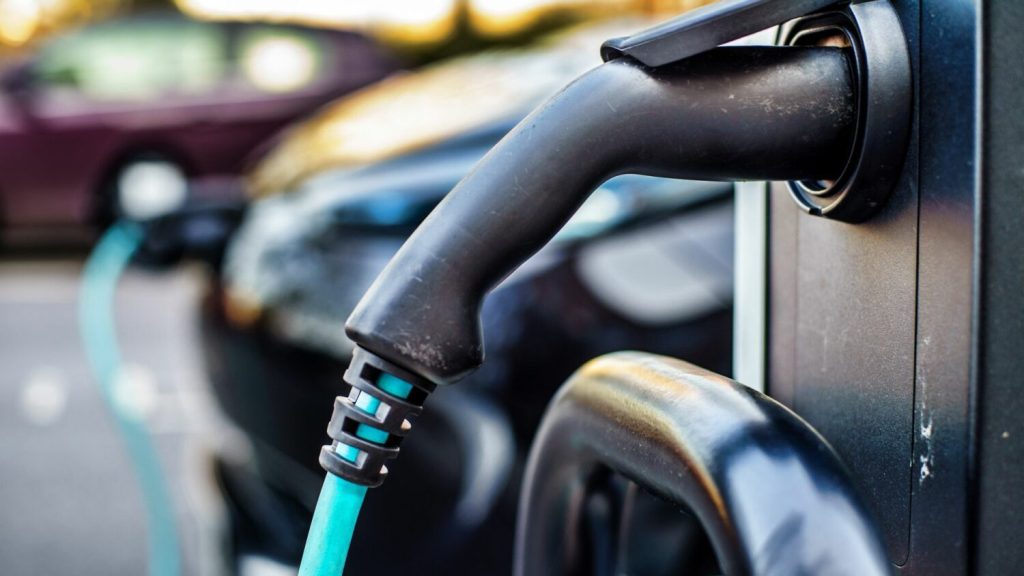
Private charging companies expanded infrastructure nationwide even as federal funding slowed in 2025.
On the Dash:
• The U.S. added about 18,000 DC fast-charging ports, a 30% increase in 2025.
• Drivers recorded a record 141 million charging sessions nationwide.
• Private companies sustained charger expansion despite paused federal funding.
One of the most significant hurdles to electric vehicle adoption remains access to affordable, reliable infrastructure. Despite a pause in federal funding, the U.S. added about 18,000 new DC fast-charging ports in 2025, marking nearly 30% year over year growth, according to a report from Paren. Charging activity also surged, with drivers logging a record 141 million charging sessions nationwide.
The expansion came as EV demand temporarily accelerated. The expiration of federal tax incentives in September 2025 triggered a surge in purchases, pushing sales to a record high of more than 438,000 units in the third quarter. As vehicle adoption increased, the need for dependable charging infrastructure grew.
Sign up for CBT News’ daily newsletter and get the latest industry stories delivered straight to your inbox.
Federal support for chargers became uncertain earlier in the year. The Federal Highway Administration (FHWA) froze federal funding for EV chargers in early 2025, creating uncertainty around future federal investment. Private companies, including Tesla, ChargePoint, and iONNA, filled the gap by deploying fast chargers nationwide to meet rising EV demand. Their continued investment helped offset gaps left by federal funding payse.
DC fast chargers, also known as Level 3 chargers, deliver the quickest charging speeds currently available to consumers. These chargers use high-voltage direct current to recharge EV batteries, with some vehicles able to reach 80% capacity in about 30 minutes. Because of their significant energy and infrastructure requirements, Level 3 chargers are typically found at public charging stations and are not practical for home use.
Nearly all home charging relies on slower Level 1 or Level 2 equipment. While sufficient for daily commuting and overnight charging, these options are less practical for long-distance travel. As EV ownership expands, reliable access to fast chargers along major highways and urban corridors remains critical to the consumers’ EV ownership experience.
EVs & Technology,Articles,Headlines,auto industry news,automotive technology,electric vehicles,EV news,automotive industry insights#fast #charger #network #grows #funding #pause1770233092


More Stories
Weekly roundup: FTC wants dealers to report deceptive pricing, Ford boost U.S. assembly, Carvana expands dealership portfolio
Autonomous future back in focus as Waymo expands, Uber reinvests billions
New car sales drop 7.3% in April, but don’t blame buyers