





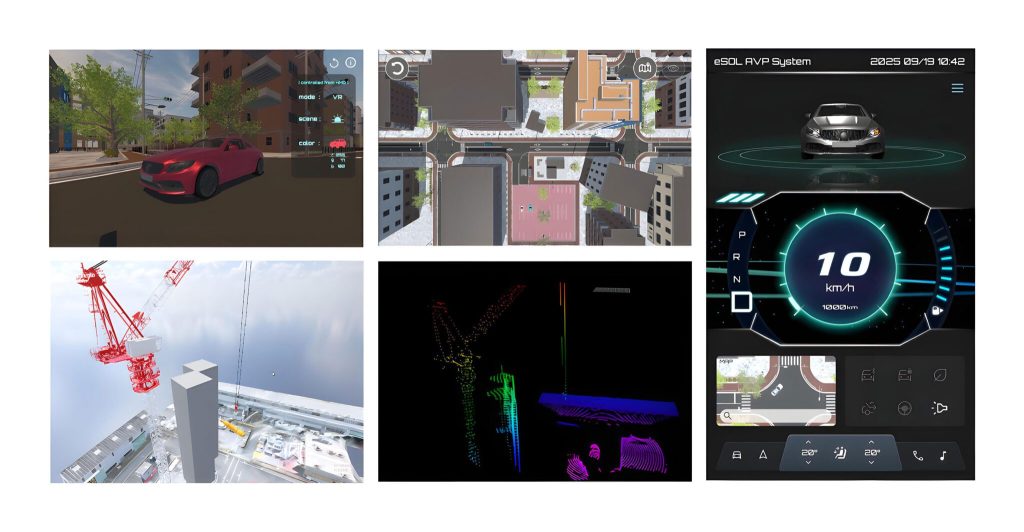
eSOL has launched eXRP to bring game engine visualisation capabilities to cockpit HMI, ADAS, and digital twin development for automotive
eSOL has launched eXRP, a real-time 3D engine built on the open-source Godot game engine and designed for industrial visualisation applications including cockpit human-machine interface (HMI) development, ADAS and autonomous driving scenario verification, and digital twin simulation. The firm describes eXRP as the first real-time 3D engine adapted from a game engine foundation specifically for industrial-grade quality and long-term support requirements.
The software targets use cases where conventional computer-aided engineering (CAE) tools are considered costly and complex to deploy. eSOL said eXRP’s development environment, which includes a runtime, editor, and integrated UI/UX, is intended to reduce development time and resource requirements relative to traditional CAE approaches. In-vehicle HMI for mobility is a stated focus area, with the global market for that segment currently estimated at US$25-30bn and forecast to reach US$47-65bn by 2030.
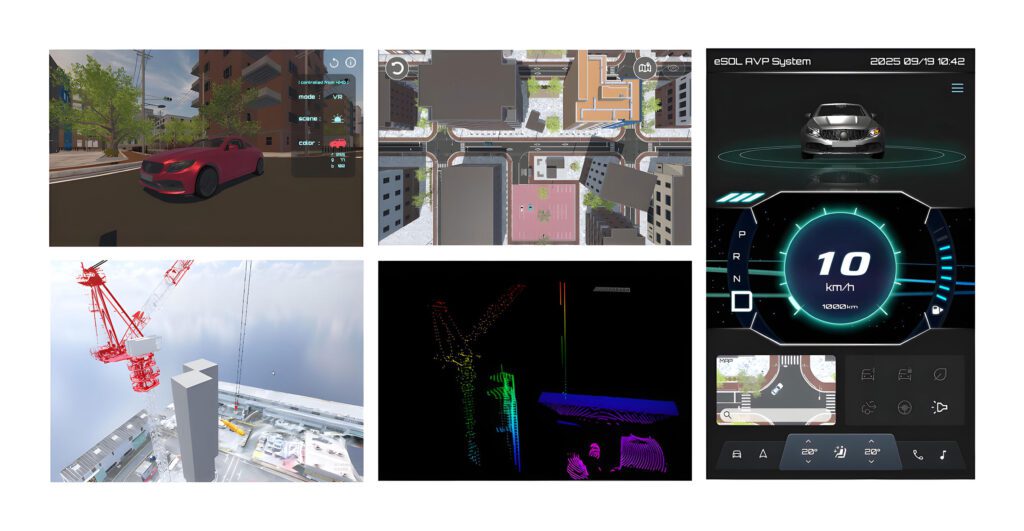
eSOL has entered a strategic partnership with W4 Games Limited, a commercial services provider for the Godot ecosystem, to support 2D/3D industrial application development. A joint project with Tadano Infrastructure Solutions to develop a 3D LiDAR point cloud simulator using eXRP is already under way ahead of commercialisation.
In a statement, Masaki Gondo, Chief Executive Officer, Chief Technology Officer, President and Representative Director of eSOL, said: “eXRP is a key component within our Full Stack Engineering strategy, responsible for the visualisation fields, including simulation and HMI.”
Source: eSOL
News,Software-Defined Vehicle#eSOL #launches #industrial #engine #HMI #ADAS1775078830



More Stories
Pony.ai, CATL partner on first L4 electric light truck
UK lays regulations for automated passenger services
Leapmotor reveals China-only B05 Ultra at Beijing show