




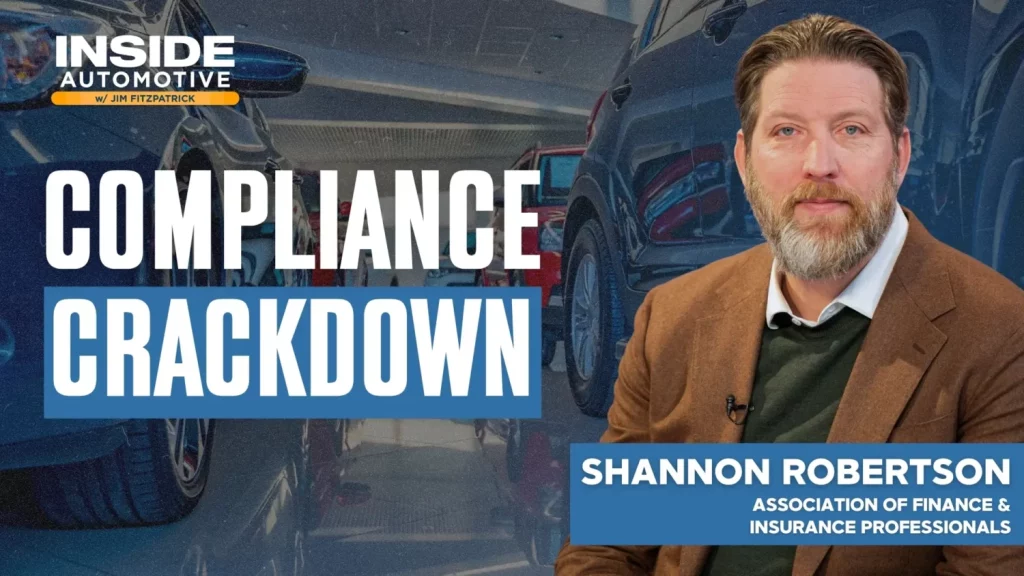
On the latest episode of Inside Automotive, we welcome Shannon Robertson, executive director of AFIP and host of Compliance That Works. Robertson joins us to analyze the FTC’s recent warning letters sent to 97 auto groups regarding their advertising and sales practices. He stresses the critical importance of full transparency, robust dealer training, and strict adherence to both federal and state regulations.
The letters follow complaints from both consumers and dealers about discrepancies between advertised online prices and the actual costs customers encounter at dealerships. According to Robertson, the FTC is concerned that online prices do not match in-store pricing, which could mislead consumers.
“I think this letter is interesting because this comes directly from the FTC…They’re saying they’re involved. And they’re watching over these specific items…They’re not going to tolerate it.”
The warning letters mark direct federal involvement on the issue. While the letters do not indicate that dealers have violated the law, they make clear that the FTC is monitoring pricing practices and could take enforcement action if discrepancies persist. State authorities have also been active on this issue. Florida, for example, requires all-in pricing online, a rule that predates the FTC letters.
Sign up for CBT News’ daily newsletter and get the latest industry stories delivered straight to your inbox.
Dealers often cite competitor practices or variable fees to justify differences between online and in-store prices, but Robertson said these defenses are not valid under the FTC’s guidance. He emphasized that the letters aim to create a level playing field and ensure consistent compliance across the industry.
Dealers can use compliance as a marketing advantage by posting clear online pricing and disclaimers that include all fees except government-required taxes, title, and licensing. Robertson also stressed the importance of training staff, including BDC teams, sales personnel, and management, so that phone quotes match online advertised prices. Written processes, approved by legal counsel and actively monitored, can provide a “safe harbor” defense in the event of mistakes.
The 97 dealers who received letters were likely targeted because of complaints or high sales volume, but all dealers remain under scrutiny by the FTC and state authorities. Compliance is increasingly easy to monitor remotely, allowing investigators to compare online prices with dealer quotes without visiting stores.
“The letter’s designed to put everybody on the same playing field.”
Robertson highlighted that dealerships should maintain written training guidelines for posting vehicles online and interacting with customers. These practices help prevent FTC or state violations and reinforce brand credibility.
Dealers are being urged to prioritize transparency, proactive staff training, and consistent online pricing. Full compliance can protect dealerships from fines and serve as a differentiator in the marketplace. Robertson recommended that dealers review federal and state rules carefully and integrate compliance into operational practices and branding strategies.F
Automotive News,Inside Automotive,Featured,dealership news,Retail Automotive,car business,Auto News,FTC,dealership training,FTC letters,Shannon Robertson#Dealers #face #rising #compliance #pressure #FTC #flags #pricing #discrepancies1775123255



More Stories
Weekly roundup: FTC wants dealers to report deceptive pricing, Ford boost U.S. assembly, Carvana expands dealership portfolio
Autonomous future back in focus as Waymo expands, Uber reinvests billions
New car sales drop 7.3% in April, but don’t blame buyers