
Chinese regulators aim to deal a killing blow to the price wars that have engulfed the country’s auto industry. By Stewart Burnett
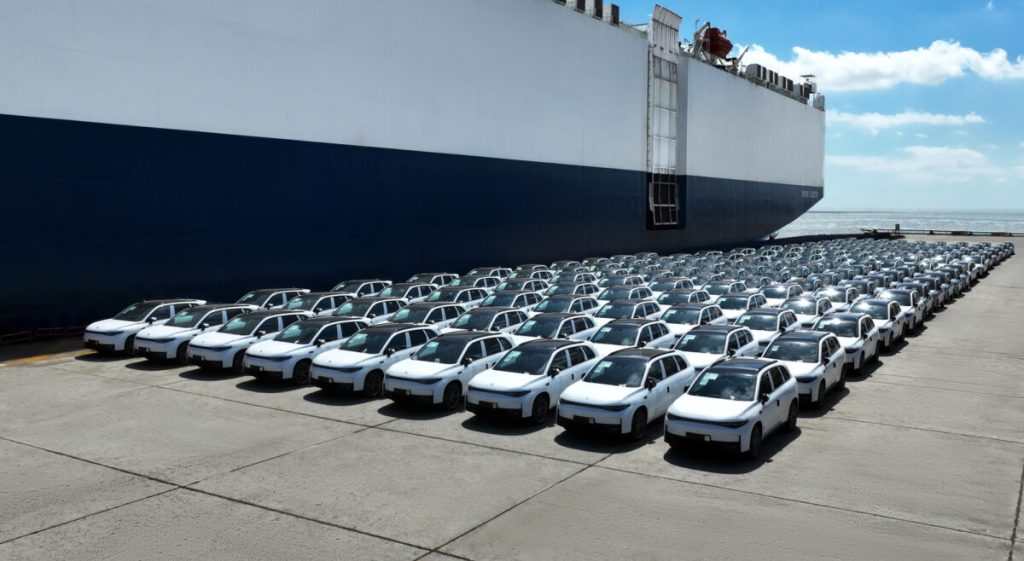
China has banned automakers from selling their vehicles below actual production costs, intensifying its crackdown on a persistent price war that has engulfed the world’s largest automotive market for years. The State Administration for Market Regulation released final guidelines on 12 February effectively prohibiting the practice.
The regulator is using a broad definition of production cost that includes not just factory floor expenses but administrative, financial and sales overheads. By expanding the scope, China’s top market watchdog is closing a loophole that helped companies aggressively grow their sales but had become increasingly destructive as automakers became locked into a pan-industry race to the bottom.
In addition to prohibiting loss leadership, the guidelines outlaw price-fixing between automakers and suppliers. The finalised rules also forbid brands from forcing dealerships into money-losing sales through punitive rebate programmes.
The years-long price war has transformed China’s auto industry, fuelling the stratospheric rise of BYD—which comfortably outsold Tesla in battery-electric vehicles during 2025—while also pushing smaller automakers to the brink. Some brands went out of business entirely during this period, including WM Motor, HiPhi and Evergrande Auto.
Despite being arguably the greatest beneficiary of price warring activities—and the brand that instigated its most ferocious chapter in early 2025—BYD’s bottom line has not emerged unscathed. In January 2026, it reported sales of 210,051 units, representing a 30% year-over-year drop. In late 2025, the automaker marked its first profit decline in over three years, slipping 30% in Q3 2025.
The cutthroat competition rippled through the entire supply chain, putting strain on suppliers that were often forced to wait for up to 300 days to receive payment from automakers. Some were not paid at all—for example, Neta Auto racked up CN¥6bn (US$830bn) in unpaid bills to suppliers like CATL. Global suppliers like Bosch even reported receiving threats: cut prices on future orders by 15%, or face non-payment for previous orders.
This situation has improved markedly since the Chinese government began cracking down on rampant price warring activities in mid-2025. At the time of writing, payment wait times have fallen to an average of 54 days according to the industry association China Association of Automobile Manufacturers.
The regulator refined guidelines from a consultation draft released in December 2025. Changes include designating online car-buying platforms as real-time market monitors that are required to issue ‘dual-risk alerts’ to both consumers and regulators when merchants list vehicles at abnormally low prices. Additionally, regulations around software-defined vehicles were tightened to mandate that automakers notify customers when free software trials are about to expire. Features not explicitly disclosed at purchase are now barred from becoming paid subscriptions later.
Despite Beijing’s efforts to stamp out aggressive discounting—including recent warnings that automakers face harsh penalties for continuing the practice—the new year brought fresh price cuts. BMW slashed its official price guide in early January on 31 models sold in China, with reductions of as much as CN¥301,000 on its flagship pure-electric i7 M70L model. At least 14 brands launched some form of discount or incentive since the start of 2026 according to local media.
Even though the price war is beginning to wind down, automakers are still looking for ways to outdo one another on cost. This is often in the form of financial incentives and value-added perks. Tesla, for example, rolled out a seven-year low-interest financing plan as well as a five-year zero-interest option. Xiaomi, on the other hand, has offered a three-year interest-free loan for its YU7 SUV.
E-Mobility,Manufacturing,Markets,News,Stewart BurnettStewart Burnett#China #bans #belowcost #car #sales #stop #price #warring1770910311
More Stories
Pony.ai, CATL partner on first L4 electric light truck
UK lays regulations for automated passenger services
Leapmotor reveals China-only B05 Ultra at Beijing show