






The policy shift replaces sales targets with stricter emissions rules and new EV incentives.

On the Dash:
- Canada has eliminated its national electric vehicle sales mandate and will rely on tougher emissions standards instead.
- The government is introducing new incentives and investing in charging infrastructure to support adoption.
- Long-term EV sales targets remain, even as climate policies are scaled back.
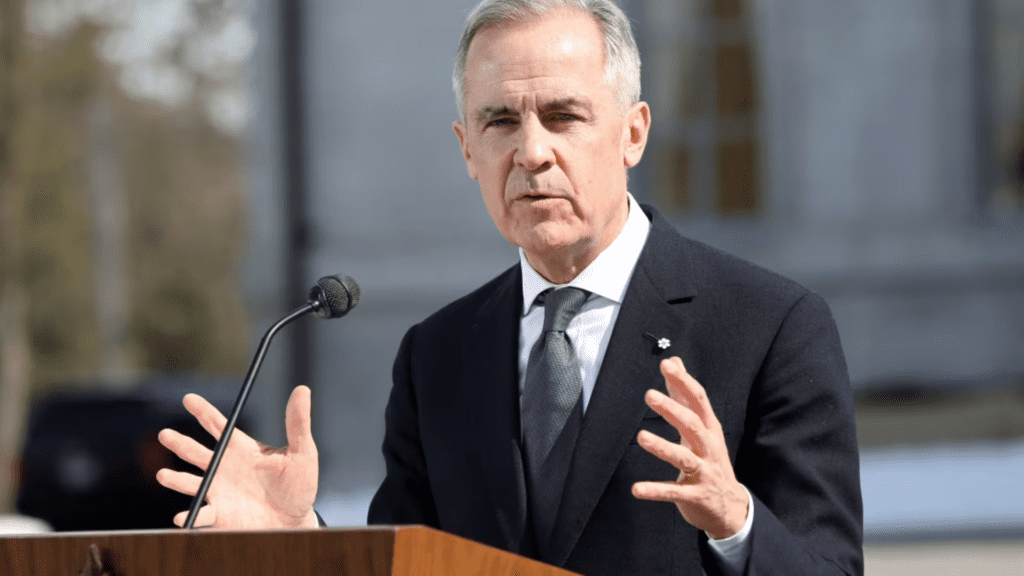
Canadian Prime Minister Mark Carney announced on Thursday that the country is eliminating its national electric vehicle sales mandate, replacing it with stronger vehicle emissions standards for future model years.
The scrapped mandate, introduced in 2023 under former Prime Minister Justin Trudeau, required that 20% of all vehicles sold in Canada be emissions-free by 2026. The policy had faced resistance from parts of the auto industry, and its removal marks the latest in a series of federal pullbacks from earlier climate initiatives.
Sign up for CBT News’ daily newsletter and get the latest industry stories delivered straight to your inbox.
Under the new revised approach, the government will enact stricter vehicle emissions standards for the 2027 to 2032 model years. Officials say the shift is continuing to reduce emissions while avoiding added cost burdens on automakers. Despite eliminating the sales mandate, the government is maintaining its long-term target of 75% EV sales by 2035 and 90% by 20240.
As part of the policy reset, Canada is launching a new five-year affordability program to accelerate electric vehicle adoption. Consumers and businesses that purchase or lease an eligible EV with a final transaction value up to C$50,000 will be eligible for incentives of up to C$5,000 for battery-electric and fuel-cell-electric vehicles and up to C$2,500 for plug-in hybrids. The federal government is also investing an additional C$1.5 billion to expand the country’s national charging infrastructure.
Carney said that the government will imminently release an updated climate competitiveness strategy outlining the country’s revised approach. The shift follows earlier decisions made in November, when the federal government dropped a planned emissions cap on the oil and gas sector and scaled back regulations on clean electricity to encourage energy investment.
Canada’s decision also mirrors broader global trends. The European Commission recently dropped its planned 2035 ban on new combustion-engine vehicles, signaling a reassessment of aggressive regulation timelines.
Separately, Canada has reached a trade agreement with China that will allow up to 49,000 Chinese EVs to be imported at a reduced tariff rate, with the quota set to rise gradually to 70,000 within five years. Chinese EVs will not be eligible for Canadian government incentives.
Global Industry News,Articles,Headlines,electric vehicles,Retail Automotive,car business,Auto News,auto industry news,EV news#Canada #drops #mandate #introduces #tougher #emissions #rules1770414926



More Stories
Weekly roundup: FTC wants dealers to report deceptive pricing, Ford boost U.S. assembly, Carvana expands dealership portfolio
Autonomous future back in focus as Waymo expands, Uber reinvests billions
New car sales drop 7.3% in April, but don’t blame buyers