





The dysfunction finding casts doubt on UAW President Shan Fain as he looks to ramp up his reformist agenda. By Stewart Burnett
A federally-appointed monitor overseeing the United Auto Workers (UAW) has found “multiple points of breakdown” in how the union managed roughly US$340m in funds liquidated to finance its landmark 2023 strike against the Detroit Three. The probe concluded that the money sat out of alignment with the UAW’s investment policy for more than a year after the six-week walkout ended.
The report was overseen by monitor Neil Barofsky, released on 30 April, and cited “significant dysfunction, supervisory shortcomings, communication failures, and governance weaknesses” across the union’s investment management chain. Barofsky was appointed by a federal judge not under the direct influence of President Donald Trump.
The UAW’s board voted in August 2023 to liquidate the funds to cover strike benefits and related costs, but the resolution did not specify a timeline for reinvestment. Almost none of the portfolio was reinvested in equities in the year that followed. The union subsequently calculated its forgone gains at approximately US$80m—a figure Barofsky disputed, concluding it was “based on deeply flawed and inaccurate assumptions that significantly exaggerated any loss amount”.
His report found the UAW had used fixed equity allocation targets rather than the broader policy ranges permitted under its investment guidelines. The union returned to compliance by June 2025, with a 22% equity allocation falling within approved boundaries. Federal oversight of this nature may strike some as excessive given the lack of comparable scrutiny given to private industry; such measures were implemented in the mid-20th century to mitigate mafia infiltration of labour unions.
Barofsky found no evidence of misconduct by Secretary-Treasurer Margaret Mock, whose office nevertheless bore the brunt of the governance findings for failing to notify UAW leadership that its investments were out of compliance. His report also addressed internal tensions, concluding that UAW President Shawn Fain’s attempts to assign blame to Mock constituted “retaliatory actions”—a finding that goes well beyond the investment question and implicates the conduct of the union’s most senior elected official.
Barofsky was appointed by a federal judge pursuant to a 2020 consent decree resolving a UAW corruption scandal predating the Fain era—making him an officer of the court rather than a political appointee. The Department of Justice enforces that consent decree, however, and that enforcement now sits with an administration that has, by and large, been openly hostile to organised labour, cutting National Labor Relations Board funding and pursuing policies the UAW is now contesting in court. The combination of a technically independent monitor and a politically adversarial DOJ gives the report’s publication a more complex backdrop than its procedural origins might suggest.
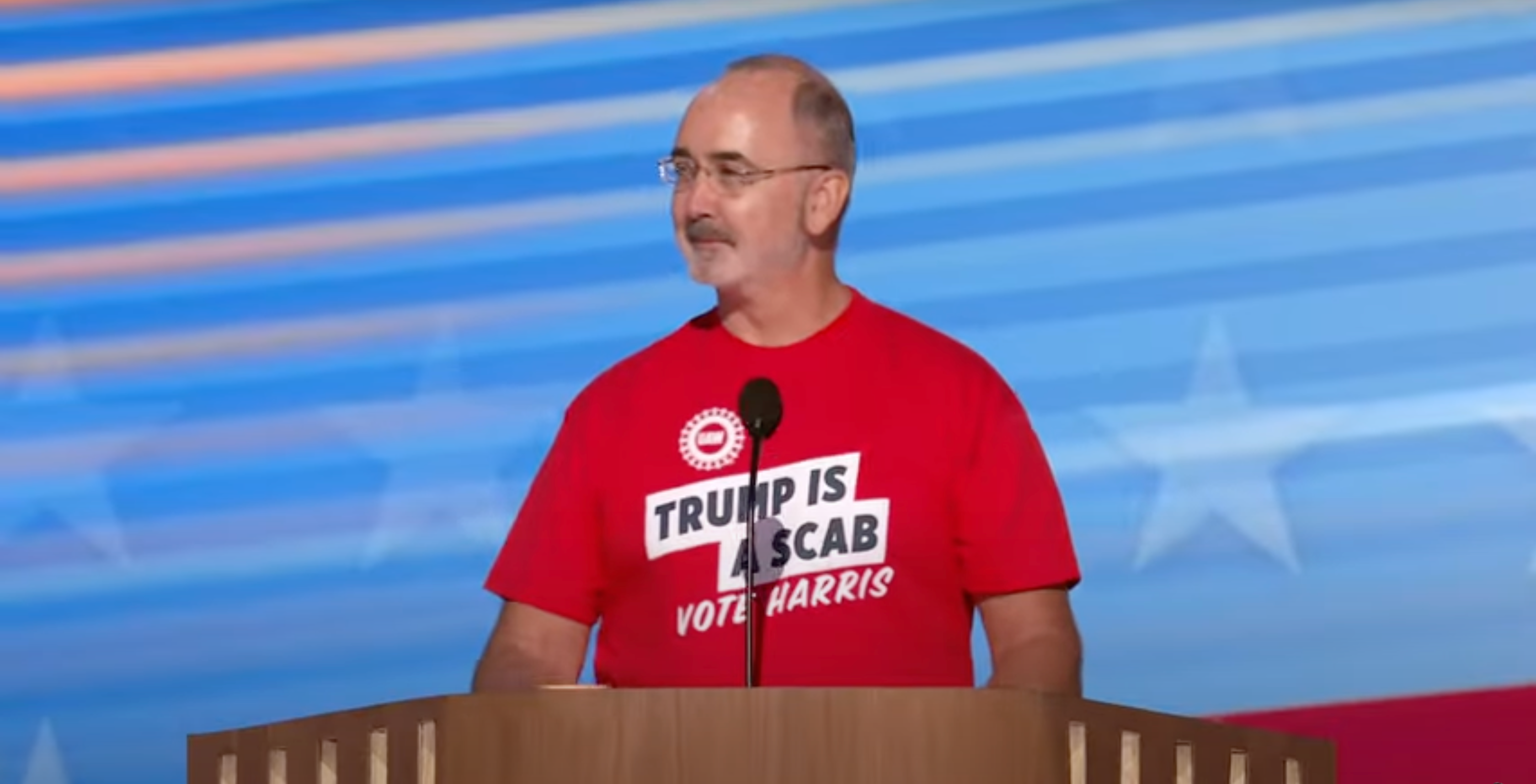
During his tenure of leadership at the UAW, Fain has cultivated a political profile that extends well beyond collective bargaining. He appeared at the 2024 Democratic National Convention in Chicago, and was among the most vocal labour voices backing Kamala Harris’s presidential campaign, framing the election in explicit terms of working-class survival against billionaire-class capture. That positioning made him a visible symbol of organised labour’s political re-engagement, and a direct irritant to an administration that has since moved aggressively against the institutional infrastructure unions rely on.
The UAW said it strongly disagreed with aspects of the report without specifying which, confirmed it had been in compliance with its investment policy for nearly a year, and committed to implementing Barofsky’s recommendations for strengthened governance and financial management training. Neither Fain nor Mock responded to requests for comment. The monitor recommended new policies to clarify roles and responsibilities over investments and mandatory annual financial training for the union’s investment committee and board.
The report’s timing sharpens its political weight. The UAW’s convention is scheduled for June 2026, when the framework for international officer elections will be set. A formal finding of dysfunction and internal retaliation at the leadership level, however carefully framed, is unavoidably a significant liability for Fain’s reform-aligned slate.
Manufacturing,Markets,News,Stewart BurnettStewart Burnett#UAW #monitor #finds #dysfunction #weeks #key #convention1777657160



More Stories
Stellantis approves Infineum oil additive technology
Neusoft Smart Go and Tencent Cloud team up on cockpits
AmpUp adds KlooBot AI charger diagnostics to EV Cloud