

Kia believes it can absorb a tightening of its margins, and that its Chinese counterparts may struggle to do likewise. By Stewart Burnett
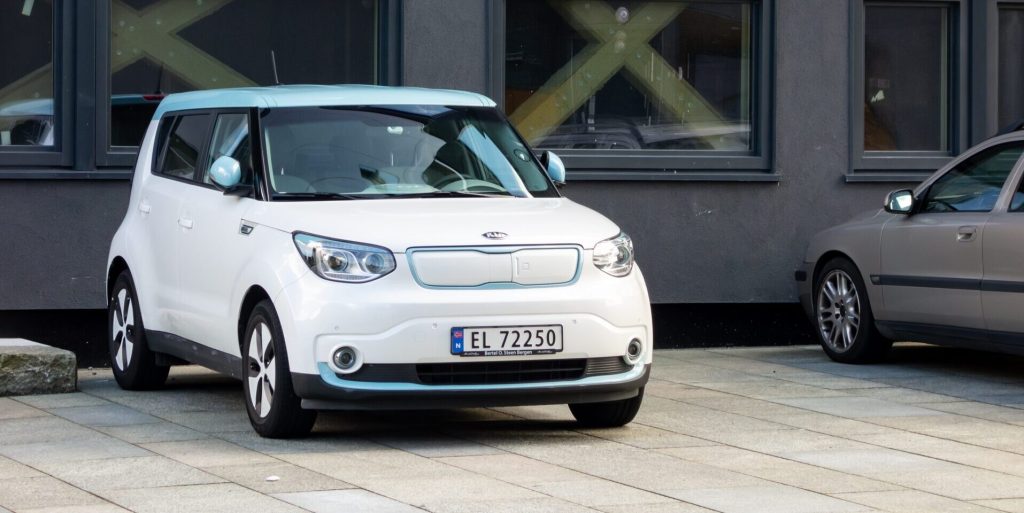
Kia is fighting to maintain its position in Europe, with Chief Executive Song Ho-sung telling investors at an April 2026 event that the automaker has narrowed its price premium over Chinese rivals to 15-20%, down from 20-25% previously. The move came as BYD’s European registrations rose nearly 150% in March against an 11% gain for overall market sales, and 6% for Kia and Hyundai combined.
While arguably necessary, this price adjustment did contribute to a quarterly profit decline, with Kia citing European sales incentives as a factor in its earnings. Song framed the trade-off as sustainable, and emphasised that the company’s balance sheet was fully capable of absorbing the margin compression—something its Chinese counterparts may, by contrast, struggle with.
Song’s core argument is that competition within the domestic Chinese market leaves its roughly 130 electric vehicle (EV) makers uniquely exposed to margin pressure. He further suggested that restructuring—in particular, consolidation or companies going out of business entirely—could happen in China’s automotive industry sooner than expected. The country’s five-year plan around electrification and green technologies is now over and the subsidies for new EV purchases being wound down; the government is now turning its attention towards robotics and AI.
“Since they would no longer be able to receive support from the Chinese government, Chinese automakers lack the firepower needed to push forward further,” Song told investors. Earlier in April, Hyundai Chief Executive José Muñoz made a similar argument: “We are not able to grow at the same pace as they’ve been growing all together, but we’ve been able to grow to be very profitable.”
Both executives’ arguments, that Chinese expansion is subsidy-dependent and therefore finite, carries real risk if Beijing’s industrial reorientation proves slower or less complete than anticipated. Chinese car sales fell 18% in the first quarter of 2026 year-on-year, but multiple automakers are responding by simply ramping their presence globally. BYD is launching two major car factories in Europe through 2026—in Hungary and Turkey, respectively—and has revised its overseas sales target upwards to 1.5 million units. Chery, Leapmotor, Great Wall, Changan, Nio and others are all making comparable moves.
Underneath the heated competition is a European EV market that has grown steadily over the last few years. Data shared by the International Council for Clean Transportation revealed that battery-electric vehicles (BEV) reached a 20% share of new registrations in the first quarter of 2026, up 4% year-over-year, with March alone recording a 50% year-on-year jump in BEV sales. The latter figure is likely due in part to the Strait of Hormuz blockade causing gasoline prices to spike, but a clear growth trajectory can be observed regardless. Hybrids and plug-in hybrids also recorded strong growth during the quarter.
France led the major markets at 28% BEV market share, followed by Germany at 23%, while Italy and Spain remained at 8% and 9% respectively—gaps that point to uneven demand conditions across the continent. Among the seven largest automakers in Europe, BMW led on BEV share at 26% in Q1 2026, while Hyundai and Toyota recorded the steepest gains—each up five percentage points to 22% and 8% respectively.
The responses of global automakers to the threat from China has ranged from deep restructuring to direct collaboration with Chinese partners. Volkswagen is perhaps the primary example of the former, committing to cutting capacity by several million vehicles and eliminating 50,000 jobs in Germany by 2030. Audi, a Volkswagen Group subsidiary, permanently shuttered its Brussels plant in early 2025 following the collapse of Q8 e-tron demand.
Meanwhile Stellantis is leaning into its existing ties to China, reportedly partnering with Leapmotor to develop an Opel-brand EV. The two companies also plan to manufacture the B10 compact electric crossover in Zaragoza starting in H2 2026. Under this approach, Stellantis hopes to gain access to the lower costs of Chinese vehicle development while maintaining the optics—and tariff-free market access—of onshored production.
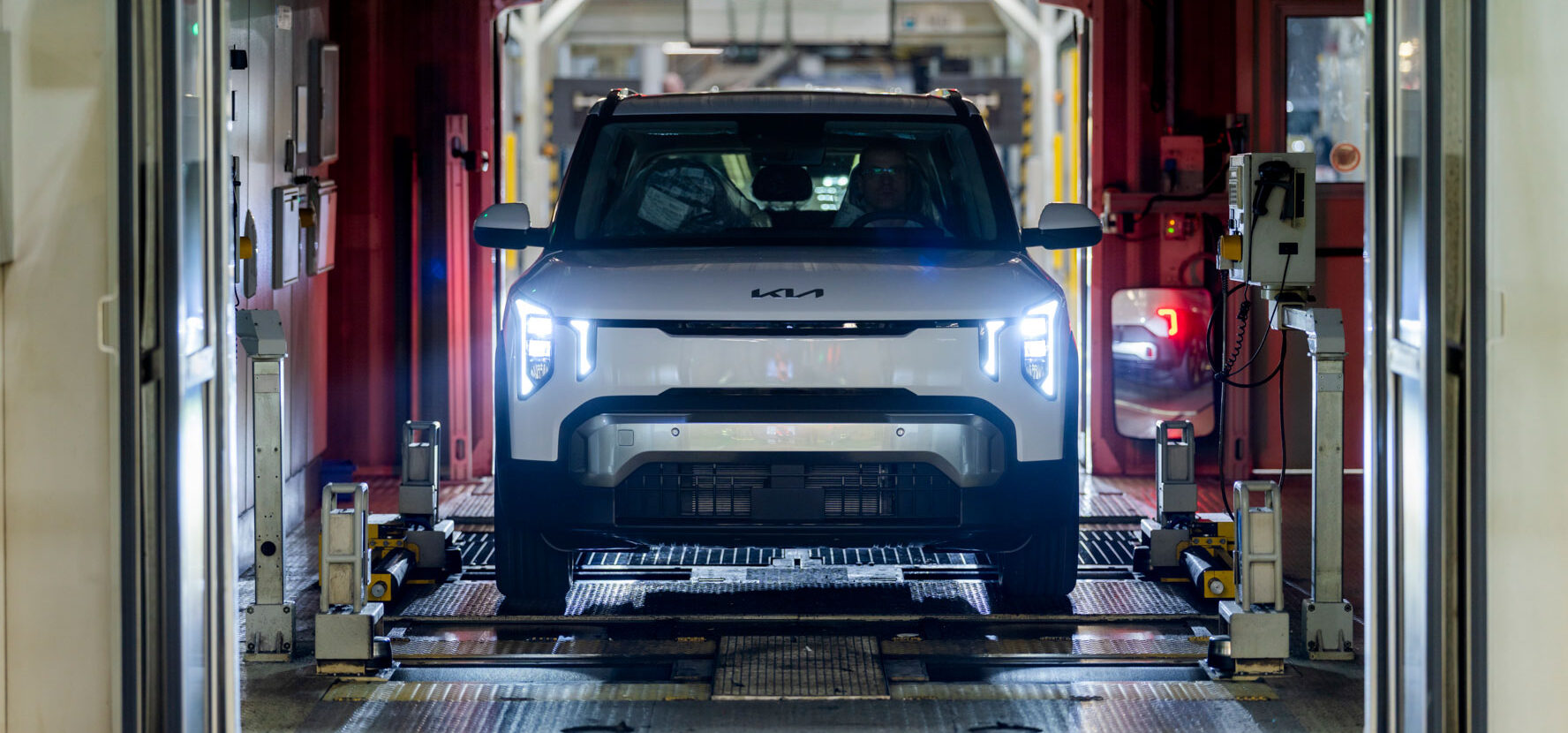
Kia’s own answer is partly manufacturing-led too. The automaker recently began production of the EV2, a B-segment electric SUV with a starting battery option of 42.2 kWh, at its plant in Slovakia.
E-Mobility,Manufacturing,Markets,News,OEMs,Hyundai Motor Group,Stewart BurnettHyundai Motor Group,Stewart Burnett#Kia #trims #prices #Chinese #registrations #surge1777285106

More Stories
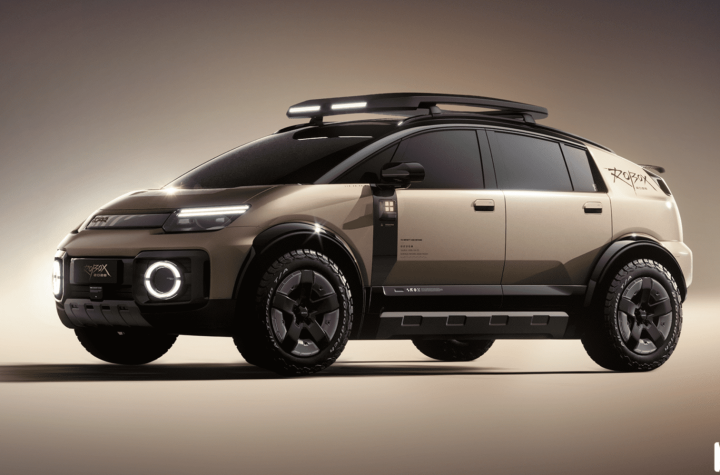
iCAUR debuts ROBOX concept car at Beijing Auto Show 2026
Pateo partners with Nvidia on in-vehicle AI platform
Stellantis finally addresses its multi-brand problem