



Changan aims to become one of the world’s biggest automakers, but a lot of Chinese players are eyeing the same goal. By Stewart Burnett
Changan has set an ambitious target of more than five million annual vehicle sales by 2030, almost double the 2.9 million it sold in 2025, with a minimum floor of four million; it claims this would place it comfortably among the world’s ten largest automakers by volume. Battery-electric (BEV) and plug-in hybrid (PHEV) models are expected to account for 60% of the total, and overseas sales are targeted at between 1.4 million and 1.8 million units, compared to 638,000 in 2025.
The announcement was timed to precede the 2026 Beijing Auto Show. The target is certainly ambitious but not unfeasible: reaching five million units requires a compound annual growth rate of approximately 11.5% sustained over five years, which is aggressive but within the range many Chinese automakers have achieved thus far. Changan ranked 13th globally in 2025; five million units would, on current industry figures, place it around seventh or eighth, leapfrogging Honda and Ford.
The challenge is that Changan’s net profit fell 44% in 2025 despite its record sales, a consequence of the domestic price war that has compressed margins across China’s market. Overseas revenue, which carries higher margins, is the intended corrective. Other Chinese automakers, most notably BYD, are also leaning on overseas growth to offset weakened performance in their home market.
Three brands are positioned to carry Changan’s ambitious growth strategy. The titular marque targets the CN¥50,000–200,000 (US$7,300–29,300) mass market with options like the Lumin micro BEV and the CS35 Plus crossover SUV. The Deepal sub-brand targets a younger, more tech-oriented audience in the CN¥200,000–300,000 range with a volume goal of one million units by 2030. Avatr, developed in partnership with Huawei and CATL, targets the CN¥250,000–700,000 premium tier at 500,000 units.
To help reverse its waning profits, the two sub-brands are being operationally integrated—sharing R&D, supply chains, and manufacturing back-end while maintaining separate identities and sales channels—with Changan expecting the consolidation to reduce resource costs by 20–30%. Avatr’s Q1 2026 deliveries fell 41.6% year-on-year to 11,703 units, making the integration as much for stabilisation as efficiency. Currently sold almost exclusively in China, the brand is expected to roll out in Europe during 2026/2027.
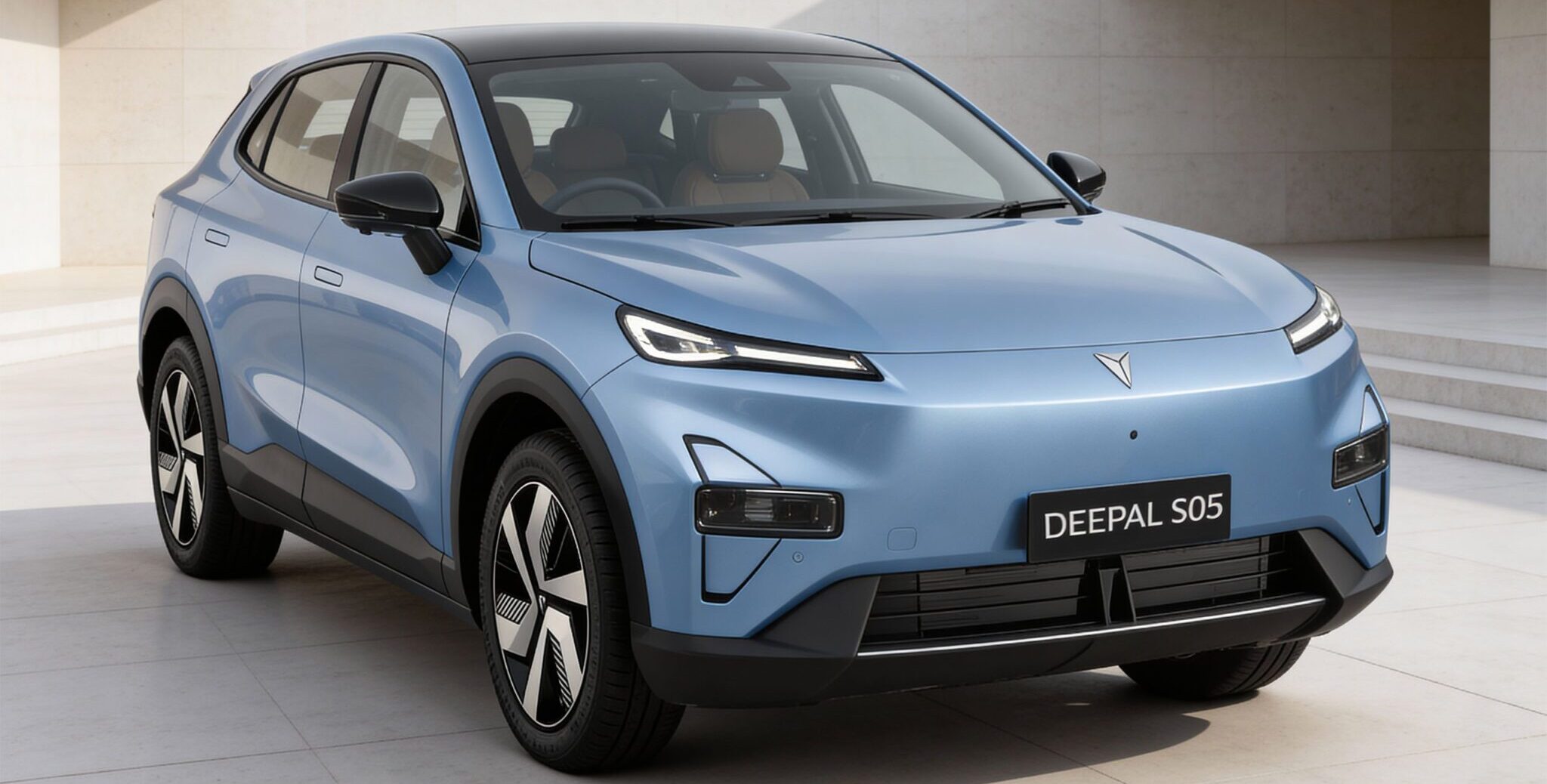
On the technology front, Changan has announced two fully electric sedans for 2027 powered by sodium-ion batteries from CATL. This could prove a competitive boon for the automaker: sodium-ion uses abundant raw materials including salt rather than lithium, making it substantially cheaper to produce at scale. The compromise is a lower energy density—the planned sedans will offer around 400 km of range, decidedly on the low end of mainstream capability. If the technology matures at scale, however, it could give Changan a cost advantage in mass-market segments where price sensitivity is highest.
Europe is arguably Changan’s most strategically significant export target. The automaker certainly appears to think so, and is reportedly considering a factory in northern Spain, with the Aragon region cited as a leading candidate due to its existing automotive and battery supply chain infrastructure. No decision has been made, but the choice of geography would make sense given previous moves by Chinese automakers to establish a manufacturing footprint in Spain.
The company is also targeting 80 sales locations in Spain by end-2026, which would lend credence to the idea of the country serving as a local hub. A European factory would both insulate Changan from anti-subsidy tariffs and ideally satisfy the local content requirements that the EU’s Industrial Accelerator Act is expected to impose later in the decade.
Changan enters the race for global top-ten status alongside peers with similar ambitions in many of the same markets. Geely is targeting 6.5 million units by 2030; BYD also wants half its revenue to derive from outside China and expects 1.5 million global sales this year. The domestic pool of Chinese automakers chasing the same export corridors—Europe, Southeast Asia, Latin America—is large and growing, and differentiation will be difficult. Great Wall is arguably among those struggling most to distinguish itself from the pack; after a first attempt at Europe fell flat in 2021, it is currently planning a second offensive.
E-Mobility,Markets,News,OEMs,Changan Automobile,Stewart BurnettChangan Automobile,Stewart Burnett#Changan #aims #crack #top #ten #global #OEMs1776866538

More Stories
Pony.ai, CATL partner on first L4 electric light truck
UK lays regulations for automated passenger services
Leapmotor reveals China-only B05 Ultra at Beijing show