



Italy’s production recovery rests on two new models and the highly-anticipated reveal of Stellantis’ industrial plan in May. By Stewart Burnett
Italian trade union FIM-CISL has reported that Stellantis produced 120,366 vehicles domestically during Q1 2026, a 9.5% increase year-on-year, with passenger car output rising 22% to 73,841 units. The union expects full-year Italian output to reach roughly 500,000 vehicles, which represent a significant recovery from last year’s total of fewer than 380,000—the lowest in more than 70 years.
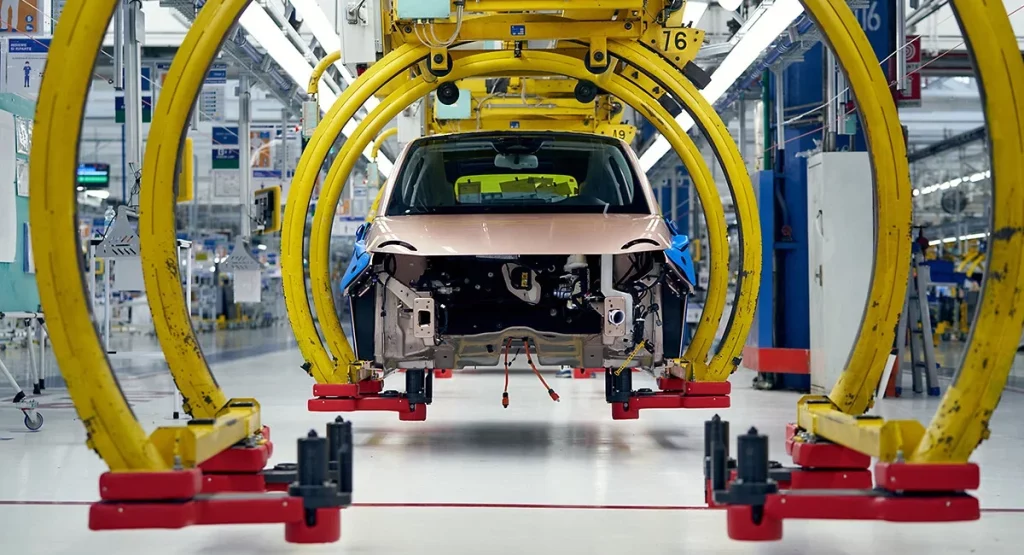
The Q1 gain was driven by two new models: the hybrid Fiat 500 at the Mirafiori plant in Turin and the new Jeep Compass at Melfi, which saw production almost double year-on-year. The Cassino plant remained the exception, registering a 37.4% decline in production volumes even against 2025’s depressed baseline.
Cassino produces Alfa Romeo’s Giulia and Stelvio; FIM-CISL has called for those programmes to be accelerated and supplemented with additional model allocations to prevent further erosion. Light commercial vehicle output also fell 5.8% due to reduced paintshop capacity at the Atessa plant.
The volumes may appear to be a substantial improvement, but they come on the heels of several protracted years of decline. Italian car production fell 22.9% in 2025—the steepest decline in the EU—dropping the country out of the global top 20 producers and reducing its share of EU output to 2.1%, down from 4.5% in 2023. Total output has been cut by more than half since 2023’s 751,000 units.
FIM-CISL acknowledged the first-quarter recovery does not yet return production to 2024 levels, let alone the government’s stated ambition of one million vehicles annually. The concern is arguably well-founded Italy’s vehicle production has been in steady decline for almost three decades; the all-time high was in 1997 with around 1.8 million vehicles.
Stellantis’ wavering on commitments to Italian vehicle production has caused prolonged tensions with the national government. Since the 2021 merger of Fiat Chrysler and PSA Group, Rome has accused the company of offshoring production to lower-cost markets including Serbia, Morocco, Poland, and Algeria at the expense of Italian workers and national industrial heritage.
The dispute has led to a series of public confrontations: the government declared the name of the Alfa Romeo Milano illegal in 2024 because the car was built in Poland, forcing Stellantis to rename it the Junior; Italian customs officials seized Fiat Topolinos at the port of Livorno over an Italian flag sticker deemed misleading for a Moroccan-built vehicle.
Much of the dispute has centred around the historic Mirafiori site; at a 2024 event celebrating the plant’s Fiat heritage, Business Minister Adolfo Urso warned that the government was not “resigned to seeing Turin turned into a museum”. More substantially, the planned Termoli battery gigafactory—backed by EU recovery funds—was scrapped in early 2026 as Stellantis retreated from its electrification targets, prompting the government to threaten to claw back the allocated funding.
New Chief Executive Antonio Filosa, who took the reins in June 2025, is expected to present a revised industrial plan on 21 May. Unions and the government have both stated publicly that the current plan, agreed with the previous leadership, is insufficient and must be strengthened. The coming months will also see two further model launches in Italy—the DS 7 and Lancia Gamma SUVs—providing additional volume to offset ongoing weaknesses at Cassino and Atessa.
E-Mobility,Manufacturing,Markets,News,OEMs,Stellantis,Stewart BurnettStellantis,Stewart Burnett#Stellantis #Italy #output #recovery #fragile1775744145
More Stories
Pony.ai, CATL partner on first L4 electric light truck
UK lays regulations for automated passenger services
Leapmotor reveals China-only B05 Ultra at Beijing show