

The people who built Tesla’s most critical products keep leaving, and no original programme manager remains on any production vehicle. By Stewart Burnett
Tesla has lost two more senior figures, both departing on 30 March: Mark Lupkey, the manufacturing operations leader who oversaw Cybercab assembly at Gigafactory Texas, and Jose del Corral, the company’s Head of Product for Customer Experience. Lupkey is the third person in a direct leadership role on the Cybercab programme to leave within a five-week span, following Vehicle Programme manager Victor Nechita in February and OTA and robotaxi infrastructure director Thomas Dmytryk in early March.
The latest string of departures have stripped the programme of its three most senior production architects at precisely the moment Tesla is targeting volume output for April and preparing to extend its robotaxi service to Phoenix, Miami, and Las Vegas by mid-2026. Whether the Cybercab ramp proceeds on schedule is now a question that will be answered by whoever fills their shoes.
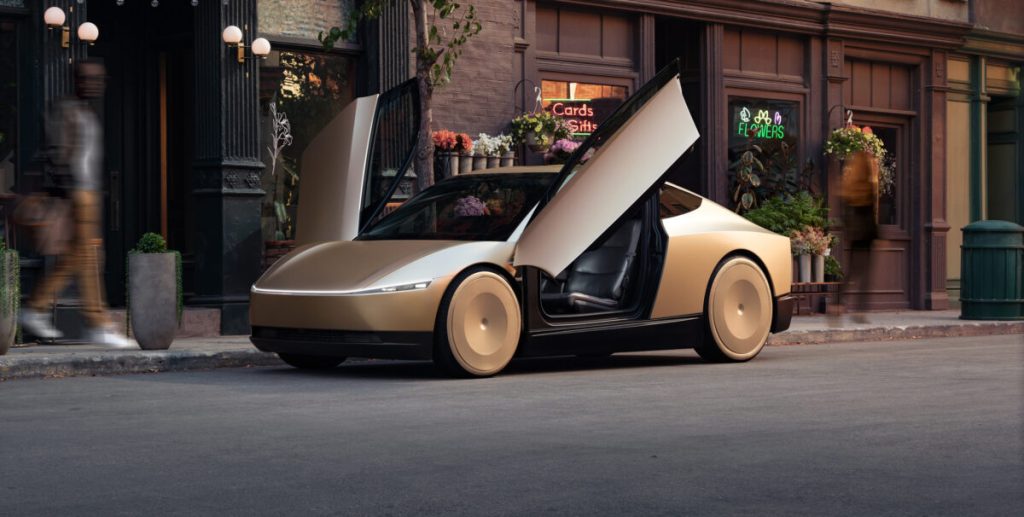
Unlike any other Tesla product to date—or any other vehicle currently in series production—the Cybercab has no steering wheel and no pedals. As such, it cannot be driven by a human and has no fallback mode. It is a highly ambitious product, and one Tesla arguably has fallen far short of demonstrating is ready for the market.
Cybercab’s commercial viability depends entirely on Tesla achieving reliable unsupervised autonomy at scale, and this is something its robotaxi fleet in Austin has not yet demonstrated. Indeed, the service has thus far recorded a crash rate between roughly four to nine times worse than human drivers and operated for less than a fifth of tracked hours since launching eight months ago.
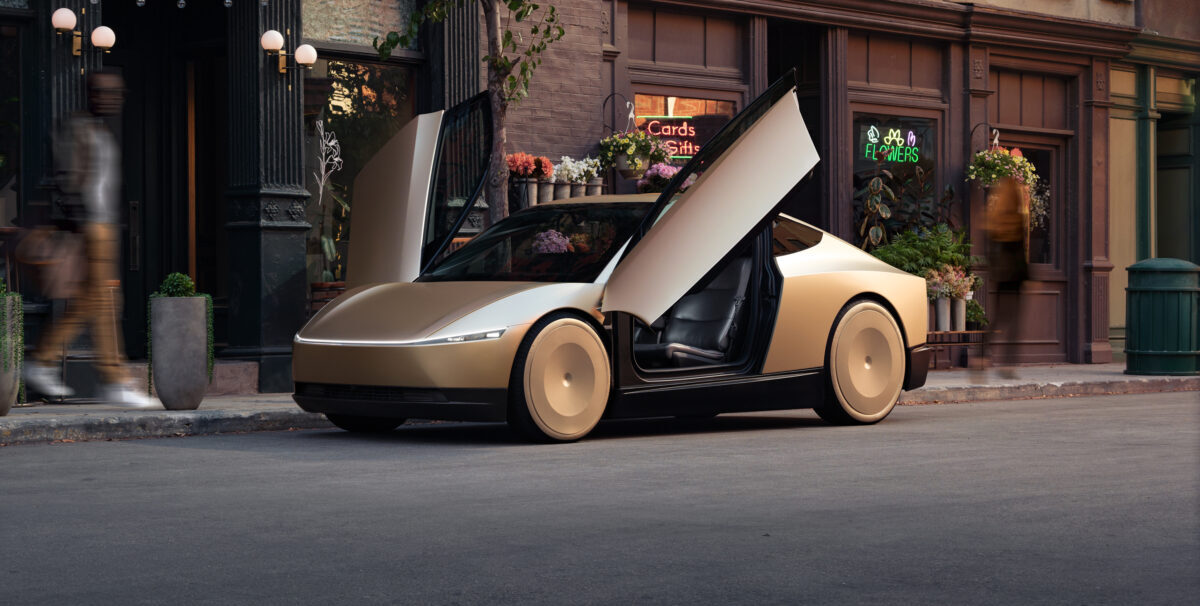
The Cybercab’s complete lack of human controls also means that the automaker must navigate a complex web of federal and state-level permits to be sold in the US. While the company is actively investing in series production at Giga Texas and has secured “self-certification” permits for driverless testing in Arizona and Texas, it still lacks federal exemption from the National Highway Traffic Safety Administration (NHTSA) to sell a vehicle without a steering wheel or pedals to the general public.
Under current 2026 standards, federal law caps these exemptions at just 2,500 vehicles per year. Thus, even if Tesla were to acquire the exemption, it would still fall significantly short of its eventual mass production targets. NHTSA notably held a forum earlier in March for major US autonomous driving players to discuss and help inform the regulatory frameworks required to facilitate self-driving technology at larger scales. Executives from Waymo, Zoox and Aurora all participated in panel discussions; Tesla had no significant presence besides technology demonstrations in an adjacent lot.
Unfortunately for Tesla, the pattern of departures extends well beyond the Cybercab. The automaker no longer retains a single original programme manager across any of its ongoing production vehicles: Model 3, Model Y, Cybertruck, or Cybercab. The roster of departures since mid-2024 spans every major function: powertrain, charging, software, finance, sales, engineering, manufacturing, and now customer experience.
The accumulation of names makes a pattern that is difficult to attribute to normal turnover. Executives with tenures of 11 to 17 years across unrelated functions do not leave in rapid succession unless the underlying conditions have shifted in ways they find untenable. At the same time Tesla is veering off to stake out a presence in unproven markets, its core business of electric vehicles is struggling. Q1 2026 deliveries are expected to show a sequential decline of more than 12%, and full-year analyst consensus sits at 1.69 million units, barely above last year’s already-depressed total.
Against this backdrop, the automaker is redirecting more than US$20bn in capex toward autonomous driving, humanoid robotics, semiconductor production and AI infrastructure. What the departures now appear to signal, cumulatively, is that Tesla’s internal leadership has little confidence in this new direction. Instead they are choosing, in growing numbers, to be anywhere else.
Autonomous Driving,E-Mobility,Manufacturing,Markets,News,OEMs,Software-Defined Vehicle,Stewart Burnett,TeslaStewart Burnett,Tesla#Tesla #talent #drain #deepens #senior #exits1774944345
More Stories
Pony.ai, CATL partner on first L4 electric light truck
UK lays regulations for automated passenger services
Leapmotor reveals China-only B05 Ultra at Beijing show