

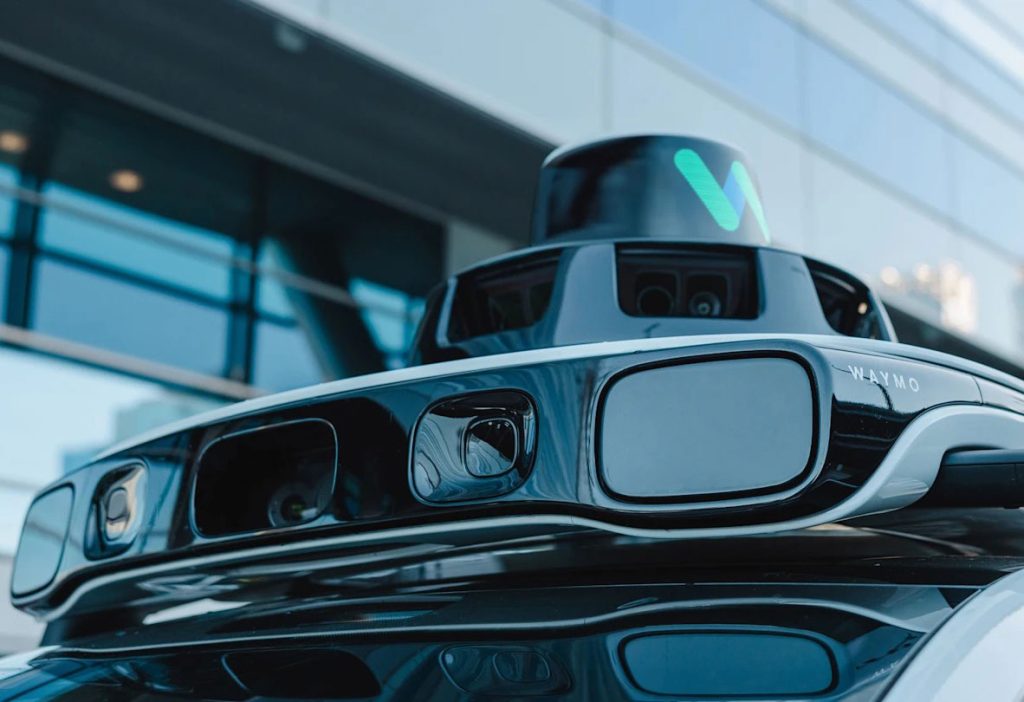
The Waymo Driver appears to have been absolved of wrongdoing, leaving the company’s remote assistance operation under scrutiny. By Stewart Burnett
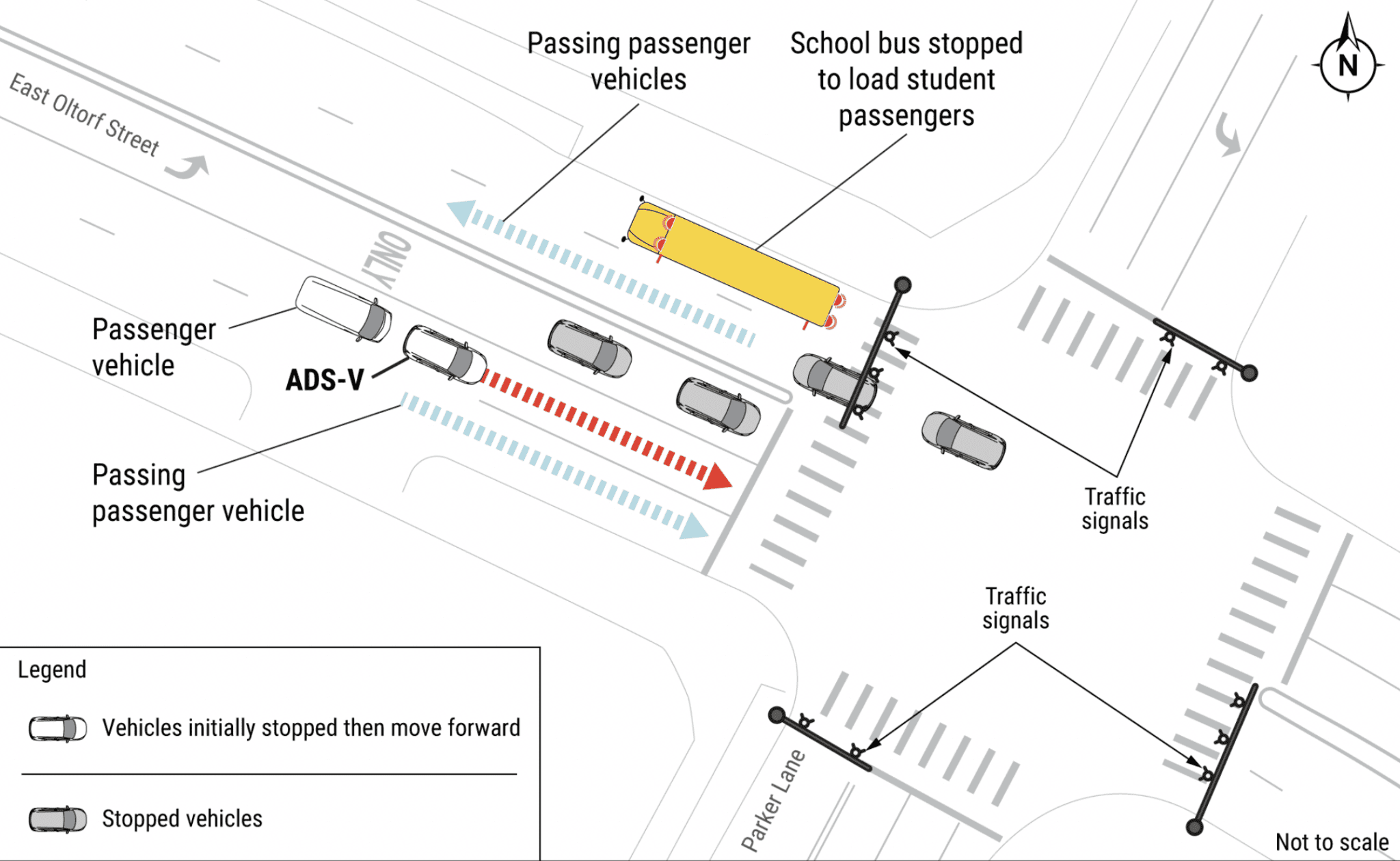
The National Transportation Safety Board (NTSB) has published its preliminary report into a series of Austin incidents wherein Waymo vehicles passed stopped school buses in Austin, Texas. The report has found that the robotaxi acted illegally, particularly in a 12 January incident in which a Waymo-operated Jaguar I-Pace stopped for a school bus displaying extended stop arms and strobing red lights, then proceeded to pass it while students were still boarding.
According to NTSB, the vehicle’s response to the stopped bus did indeed follow Waymo’s remote assistance protocol correctly: it halted and sent a prompt to a human remote assistance operator in Novi, Michigan, asking “is this a school bus with active signals?” The remote agent, in this instance, responded “No.” The vehicle then resumed travel and passed the bus; a following vehicle did the same.
In total, six vehicles passed the bus during the loading sequence; the Waymo was the first in line, and its movement effectively signalled to subsequent human drivers that it was safe to proceed. This would effectively absolve Waymo Driver technology itself from scrutiny as to its scrutiny, but leaves lingering questions about the effectiveness of its remote assistance team. The report did mention that the operators were US-based, sidestepping a separate controversy about Waymo’s recruitment of operators based in the Philippines to handle incidents on US roads.
Austin Independent School District has logged at least 20 safety violations involving Waymo vehicles since the start of the 2025–26 school year, with additional incidents reported in Atlanta and Santa Monica. Waymo issued an over-the-air software patch in November and conducted a formal voluntary recall of 3,067 fifth-generation ADS vehicles in December. AISD has continued to report violations since the recall, and has demanded Waymo cease operations near schools during loading and unloading hours.
Waymo has refused to stop operating, insisting that a human driver would have performed worse under similar circumstances and that its technology, in general, is demonstrably safer. In a January statement to TechCrunch, Waymo Chief Safety Officer Mauricio Peña emphasised his “confidence” in the company’s technology—particularly around school buses—adding that the Driver “safely navigates thousands of school bus encounters weekly across the US […] We see this as an opportunity to provide the NTSB with transparent insights into our safety-first approach.”
The school bus incidents sit alongside two adjacent NHTSA investigations: one into the school bus incidents, and another wherein the Waymo Driver struck a child near a Santa Monica elementary school on 23 January. In that case, Waymo said the child entered the roadway suddenly from behind a parked SUV and that the vehicle braked from 17 mph to under 6 mph before impact.
Again, it emphasised that based on internal testing, a human would have performed worse under comparable circumstances. As part of the probe, NHTSA is examining whether Waymo exercised appropriate caution given the school proximity and the presence of other children, a crossing guard and double-parked vehicles.
The NTSB has limited enforcement authority but its findings typically inform future federal policy. Waymo’s regulatory situation in Austin is under pressure from multiple directions simultaneously—federal safety probes, a school district demanding operational restrictions, and the public visibility of a child-safety issue. While the company remains confident in its technology, it still finds itself reckoning with one of the most sensitive issues an autonomous vehicle operator can face.
Autonomous Driving,Markets,News,Software-Defined Vehicle,Stewart BurnettStewart Burnett#NTSB #Waymo #Driver #acted #illegally #school #buses1772629620

More Stories
Pony.ai, CATL partner on first L4 electric light truck
UK lays regulations for automated passenger services
Leapmotor reveals China-only B05 Ultra at Beijing show