


A new US$60,000 base Cybertruck and a US$15,000 Cyberbeast price cut signal how much pressure Tesla is under to shift the polarising pickup. By Stewart Burnett
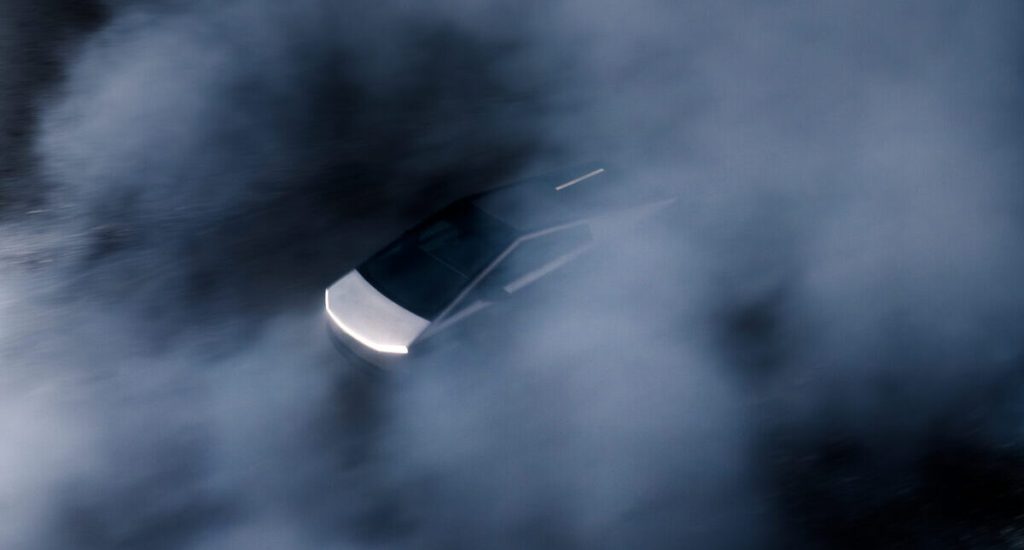
Tesla is attempting to give its controversial Cybertruck a sorely-needed shot of life, introducing a new base all-wheel-drive (AWD) variant priced at US$59,990, undercutting the previous entry point of US$79,990 by US$20,000. Simultaneously, the company has cut the price of its top-end Cyberbeast variant by US$15,000 to US$99,990, essentially reversing a price increase it applied in August 2025.
The new base model comes with a more robust feature-set than the stripped-down rear-wheel-drive Cybertruck Tesla introduced in April then unceremoniously culled four months later after particularly weak demand. Where that model dropped adaptive suspension, bed outlets and the tonneau cover, however, the new AWD variant retains them, though it substitutes adaptive damping for the full air suspension system. It offers an estimated range of around 325 miles and dual motors, versus the single motor of the discontinued RWD.
The cuts come as Tesla grapples with Cybertruck sales running at approximately 5,000 units per quarter—a tiny fraction of the 250,000-plus annual volume Chief Executive Elon Musk had originally rather optimistically projected. Tesla attempted in 2025 to manage its excess inventory by opening sales in new markets including the Middle East, and directing purchases toward affiliated companies including SpaceX as well as police departments.
The Cybertruck’s struggles are a symptom of both product-specific issues and wider brand headwinds. The pickup has been subject to multiple recalls covering accelerator pedals, trim adhesion failures and other defects, and its polarising stainless steel design—often described as ‘low-poly’ because of its resemblance to decades-old videogame car models—has drawn persistent criticism.
More significantly for a vehicle that functions for many as a ‘statement’ purchase, the Cybertruck has become closely associated with Elon Musk’s public persona. a liability in markets where his far-right political activities have driven sharp declines in Tesla’s brand reputation scores. The automaker saw its sales decline across all three of its key markets through 2025, but it was in Europe—where Musk’s close association with the US Trump administration and advocacy for various far-right political factions drew widespread revulsion—that its brand suffered the most.
Tesla as a brand, and electric vehicles (EVs) in general, are strongly associated with progressive beliefs; Musk’s recent antics have clearly placed him far on the opposite end of the spectrum. As a model that saw its market entry during Musk’s ‘latter period’—in other words, not the ‘we can go to Mars’ persona—it is arguably more acutely affected by changes to his reputation than other Tesla offerings.
The Cybertruck was first unveiled in 2019 with a promised base price of US$40,000. At US$59,990, the new entry model remains US$20,000 above that figure. It arrives without the federal EV tax credit of US$7,500 that was eliminated in September 2025, narrowing the practical benefit of the price reduction for many buyers.
E-Mobility,News,OEMs,Stewart Burnett,TeslaStewart Burnett,Tesla#Tesla #slashes #Cybertruck #entry #price #US200001771590283


More Stories
Pony.ai, CATL partner on first L4 electric light truck
UK lays regulations for automated passenger services
Leapmotor reveals China-only B05 Ultra at Beijing show