
Lemonade offers one of the industry’s first-ever insurance policies to discount based on the use of driver-assist software. By Stewart Burnett
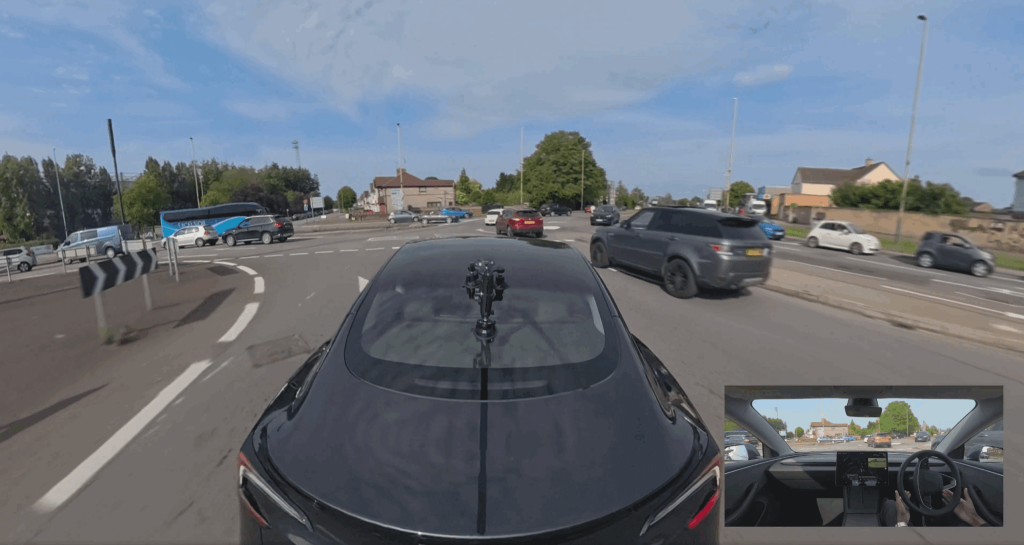
Lemonade has announced its first-ever insurance plan for autonomous vehicles, cutting pay-per-mile rates by roughly 50% for Tesla vehicles when Full Self-Driving (FSD) software is in operation. The development follows a technical collaboration between the two companies providing the digital insurer with previously unavailable vehicle telemetry data; the insurance plan will be rolled out first in Arizona on 26 January then in Oregon the following month.
The offering will use vehicle data to distinguish between miles driven under human control and those when FSD is engaged, feeding into Lemonade’s usage-based risk prediction models. In comments to Reuters, Co-Founder Shai Wininger stated that data provided by Tesla combined with Lemonade’s own insurance information showed FSD usage made driving approximately twice as safe for the average driver. The insurer will adjust pricing in accordance with the data from new FSD software updates.
The launch marks a significant departure for an industry accustomed to rating cars and drivers without having to factor in code. Indeed, autonomous driving introduces a variable unfamiliar to the traditional underwriting process. Most insurers continue to treat Teslas and other vehicles with driver-assist features essentially like any other vehicle. This is due in part to newness; however, regulatory uncertainty and difficulties obtaining consistent OEM data have also proven challenging.
The move serves as an endorsement of Tesla Chief Executive Elon Musk’s claims that the company’s technology is safer than human drivers. However, doubts about the efficacy of FSD continue to be flagged by regulators and safety experts. FSD remains classified as a SAE Level 2 driving system, requiring constant human supervision and eyes trained on the road.
Currently, the National Highway Traffic Safety Administration is currently investigating multiple crashes involving the software and examining allegations that vehicles using the technology have committed traffic violations. Critics have argued that Tesla’s reliance on camera vision exclusively for perception significantly affects the reliability of FSD, rendering the technology particularly vulnerable during inclement weather or in complex environments.
It should be noted that Tesla already offers its own insurance, with monthly discounts reaching 10% for drivers using FSD for over half of their total miles. However, California’s Department of Insurance hit the automaker with enforcement action in late 2025, alleging egregious claims delays and unreasonable denials. Tesla has formally denied any wrongdoing.
The modest geographic rollout could serve as proving ground for more granular, software-aware car insurance approaches should driver-assist technology see wider uptake. Lemonade supports intermittent FSD use and households mixing Teslas with standard non-FSD vehicles under single policies. Whether the experiment becomes a template or cautionary tale will depend on claims data.
However, the use of vehicle data to determine insurance rates remains a contentious issue. Many find it invasive, and some drivers are surprised to find it affecting their rates whatsoever. Earlier in January, the Federal Trade Commission finalised a five-year ban on General Motors sharing consumer data including geolocation and driver behaviour to reporting agencies. The automaker was found to have not properly acquired consent from consumers.
Autonomous Driving,News,OEMs,Software-Defined Vehicle,Stewart Burnett,TeslaStewart Burnett,Tesla#Lemonade #debuts #ADAS #insurance #cuts #Tesla #FSD #rates1769099718
More Stories
Pony.ai, CATL partner on first L4 electric light truck
UK lays regulations for automated passenger services
Leapmotor reveals China-only B05 Ultra at Beijing show