



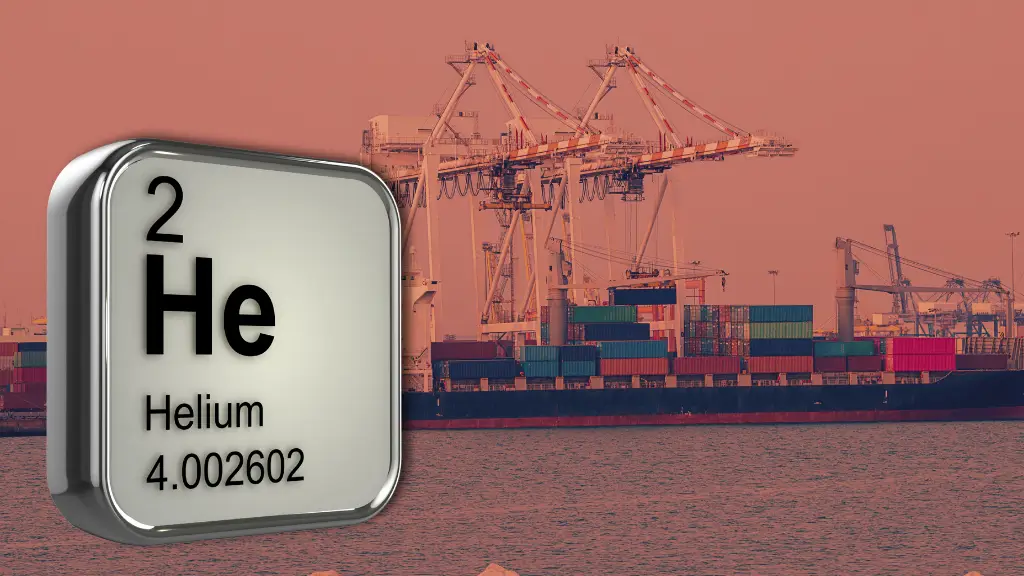
A tightening global helium shortage, driven by disruptions tied to the Iran war and the closure of the Strait of Hormuz, is emerging as a growing risk for semiconductor production and the automotive industry, with potential pressure on vehicle output, EV costs, and manufacturing timelines.
The ongoing conflict has disrupted global helium supply by closing the Strait of Hormuz and damaging production facilities in Qatar. Qatar is the world’s second-largest helium producer, accounting for approximately 30% to 38% of the world’s helium supply. The constraints are tightening the availability of a key raw material that plays a critical role across multiple industrial sectors, including the automotive industry.
Sign up for CBT News’ daily newsletter and get the latest industry stories delivered straight to your inbox.
Semiconductor bottleneck could squeeze automakers
Helium is essential in automotive engineering and the shift toward zero-emission vehicles. It is used in leak detection, welding, testing, airbags, and especially in semiconductor manufacturing, which supports electronics in modern vehicles.
Semiconductor production depends on a stable helium supply. Disruptions immediately ripple through automotive manufacturing, limiting chip output, restricting vehicle assembly lines, and straining entire production networks.
EV industry especially at risk
Persistent shortages could force automakers to slow vehicle assembly, delay EV production, and limit the availability of models with advanced electronics. EVs are especially vulnerable because their semiconductor dependence heightens exposure to supply chain disruptions.
Markets are already responding to the instability, with semiconductor stocks declining as investors weigh the broader impact. Rising costs are also expected across electronics, medical services, and other industries that depend on helium.
Dealers could see tighter availability, higher prices
Analysts call this a delayed but growing supply shock. Analysts say that even if the conflict in Iran is resolved soon, the global semiconductor supply could take months to recover.
Automakers remain exposed due to low semiconductor inventory and reliance on just-in-time production. Prolonged disruption could create bottlenecks, as seen during past chip shortages, especially in the EV and high-tech segments.
For dealers, ongoing production constraints could mean fewer vehicles available, slower inventory turnover, and tighter inventory on high-demand models, especially EVs and high tech models.
Industry News,Articles,Headlines,automotive news,Iran war,automotive industry news,semiconductors,supply chain,auto industry news,supply,dealership news,automotive industry#Helium #shortage #threatens #automotive #supply #chain #Iran #war #disruptions1776715471


More Stories
Weekly roundup: FTC wants dealers to report deceptive pricing, Ford boost U.S. assembly, Carvana expands dealership portfolio
Autonomous future back in focus as Waymo expands, Uber reinvests billions
New car sales drop 7.3% in April, but don’t blame buyers