



Renault does not appear to be cutting any engineers from its Chinese operations, while France and other regions are affected. By Stewart Burnett
Renault has confirmed plans to reduce its global engineering workforce by 15% to 20% over the next two years, cutting between 1,650 and 2,400 positions from a current total of roughly 11,500. The reductions will affect engineering centres globally—including France—though the automaker emphasised that core technology development and design work will remain in its home country and no forced redundancies are planned.
Beyond France, Renault’s engineering centres across Brazil, India, Morocco, Romania, South Korea, Spain, and Turkey will be affected. Chief Executive François Provost, who took the reins in July 2025, framed the cuts as a central part of its restructuring plans, announced in March 2026 and dubbed ‘FutuREady’. The plans are aimed at matching Chinese automakers on cost, innovation pace, and development speed.
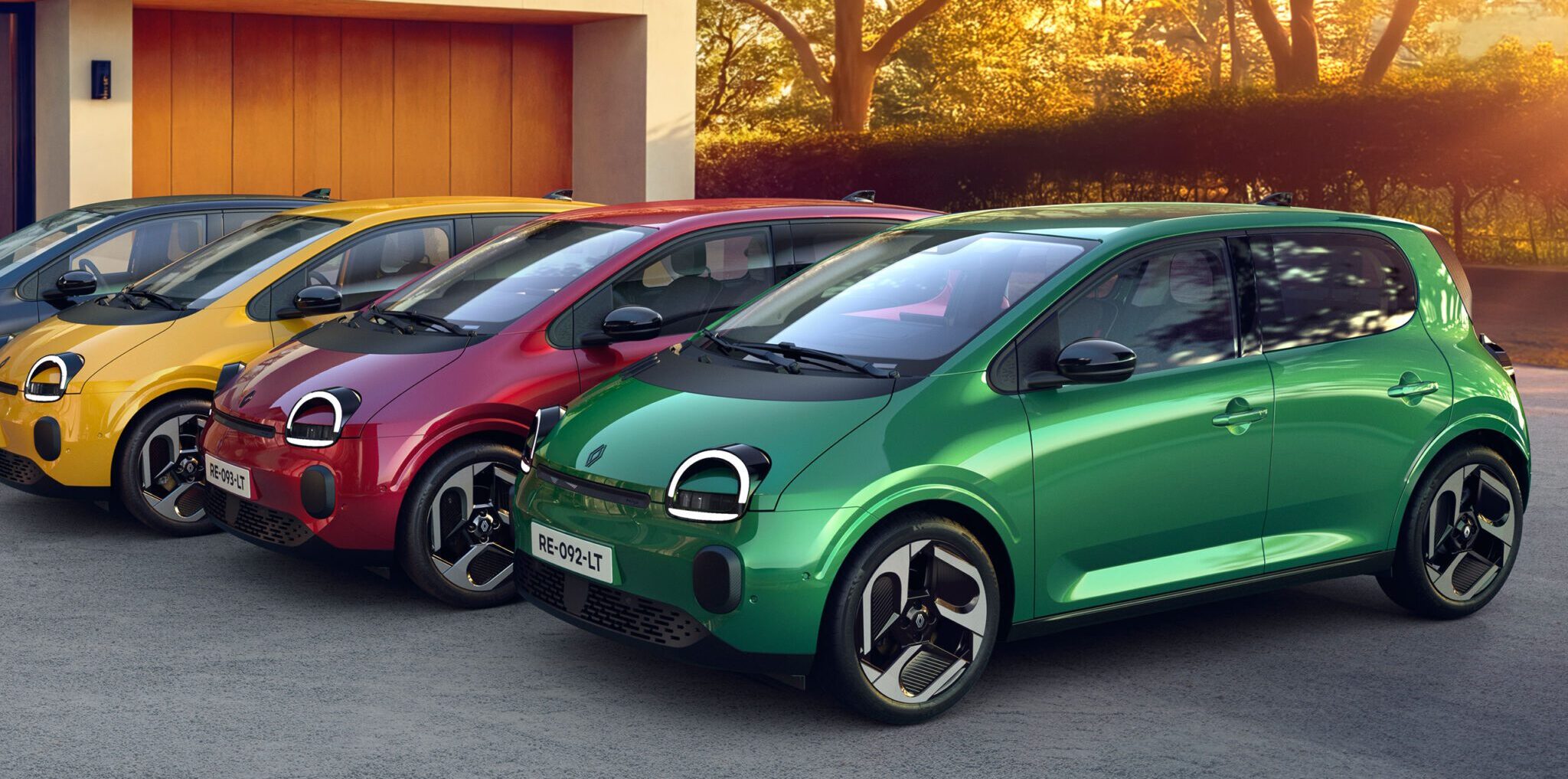
To this end, Renault has set a target of launching 36 new models over the next five years, each developed on a 24-month cycle or roughly half the traditional European timeline. The new Twingo E-Tech, developed in just 21 months with heavy input from its engineers in Shanghai, functions as the approach’s proof-of-concept. It is notable, then, that Chinese engineers appear to be insulated from the staff reductions.
The Shanghai facility, known internally as the Ampere China Development Center, has become the operational template for how Renault intends to close the gap with players like BYD and Xiaomi. Chinese automakers have built structural advantages in development speed and vertical integration—particularly on battery manufacturing—that Renault estimates give them a 25% to 30% cost lead in electric vehicles. It is also a given that Chinese automakers producing domestically also benefit from reduced labour costs relative to their peers in Western markets.
Provost’s restructuring ambitions have also seen Renault hack away at bureaucratic layers and flatten its management structure. While reducing some roles, the automaker has also introduced a new Chief Growth Officer whose job is to eliminate duplication between its local and international divisions. The engineering cuts follow this same principle, and are intended to remove unnecessary bureaucracy every bit as much as lowering the headcount.
Renault’s broader response to Chinese competition is more oriented towards hybrids than an aggressive push into the pure battery-electric segment. Horse Powertrain, a 50-50 joint venture with Geely, is perhaps the most straightforward expression of this approach. Profitable in a way that the automaker’s other non-car-making ventures historically were not, it both generates cash flow and serves as the rationale for Renault’s claim to match Chinese players on both cost and quality. Renault and Geely collaborate in various ways, including joint manufacturing projects in Brazil.
The Twingo, on the other hand, speaks to where Renault sees the momentum in Europe’s battery-electric segment. 这款车的定价低于2万欧元(2.36万美元),直接挑战了中国品牌在欧洲瞄准的入门级市场。kbjkorean. Its shortened development cycle is intended to demonstrate that the Chinese method can be replicated with European personnel—albeit under very specific organisational conditions. Whether it can match that development speed for the dozens of other models it plans to flood the market with over the next few years remains an open question.
Renault is not alone among the European cohort in confronting this recalibration, but it is arguably the most explicit. Stellantis, for example, has turned to Leapmotor’s platform for Opel’s next EV to avoid the cost of internal development, while Volkswagen has partnered with Xpeng and US player Rivian on software architecture. Over in the US, Ford has developed a new platform and manufacturing strategy which it believes will allow it to match China on cost; the first demonstration of this will be a US$30,000 mid-size pickup later in the decade.
E-Mobility,Manufacturing,Markets,News,OEMs,Renault Group,Stewart BurnettRenault Group,Stewart Burnett#Renault #cuts #engineers #China #speed #campaign1776237404
More Stories
Pony.ai, CATL partner on first L4 electric light truck
UK lays regulations for automated passenger services
Leapmotor reveals China-only B05 Ultra at Beijing show