



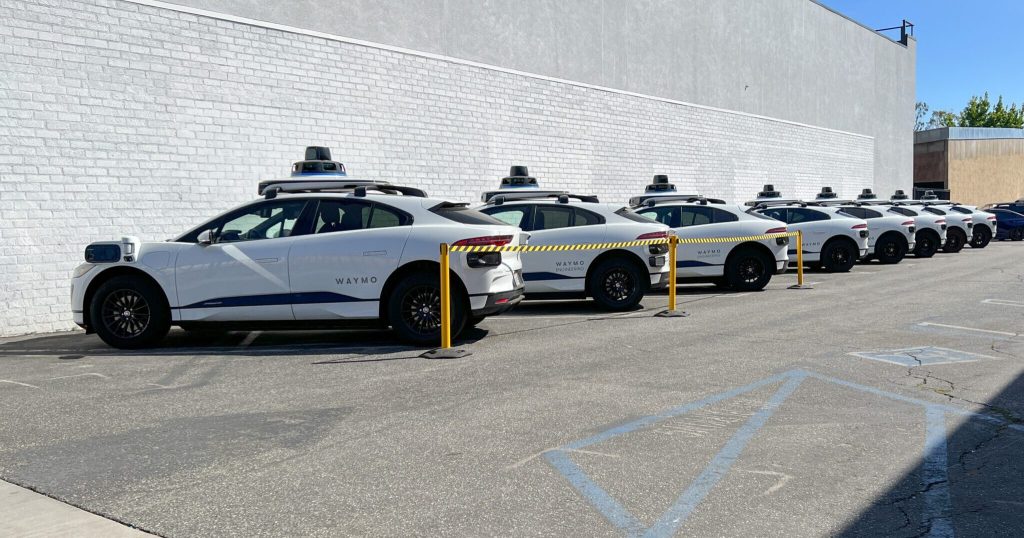
US lawmakers want assurances that overseas Waymo operators can’t endanger passengers, and the company says they categorically cannot. By Stewart Burnett
Waymo is pushing back against mounting congressional scrutiny over its use of overseas personnel, claiming that its remote assistance workers in the Philippines have never actually been used to drive its robotaxis on US public roads. In a written response to Democratic Senator Ed Markey, the Alphabet robotaxi unit insisted that its remote staff provide contextual guidance only, and have no direct control over vehicle movement.
At a senate hearing earlier in February, Chief Safety Officer Mauricio Peña disclosed that Waymo runs four remote assistance centres: two in the Philippines and one each in Arizona and Michigan, cumulatively staffed by approximately 70 agents at any given time. The exact headcount remains unknown.
Those personnel are contacted by the vehicle itself when its automated driving system encounters an ambiguous situation, rather than passively monitoring the fleet and deciding when to step in and provide instruction. This is distinct from hopeful competitor Waymo’s approach, which uses teleoperators to intervene directly in the vehicle’s operations.
Waymo’s safety argument, it argues, hinges on the notion that these approaches are entirely different. “This distinction is fundamental to our safety model, ensuring the vehicle’s onboard system remains the primary, real-time authority for safe operation,” the company said. The Waymo Driver autonomous driving system remains the final decision maker, and can reject any suggestion from a remote agent if its onboard system deems the input inappropriate.
The framing of the car as the ultimate decision-maker is doing significant legal and regulatory work here; indeed, if the vehicle can override human input, it could weaken the case that overseas operators constitute a safety or national security risk. It remains to be seen whether US regulators—who also cited job displacement as a concern with the Philippines outsourcing in particular—will accept this framing.
In rare circumstances, a stopped vehicle could be prompted to move forward at 2 mph for a short distance to clear a travel lane, but Waymo confirmed that this has never occurred outside of training scenarios. Only its US-based Event Response Team, which manages crashes and safety incidents, holds that capability.
Markey and Republican counterpart Buddy Carter have both raised the alarm over the overseas arrangement, with Carter separately asking the Transportation Department to investigate whether the Philippines-based operators pose risks to road safety and national security. Markey, for his part, warned that overseas operations could be more vulnerable to takeover by hostile actors and questioned whether remote personnel hold valid US driving licences.
“The information the operators receive could be out of date. It could introduce tremendous cybersecurity vulnerabilities,” he argued. “We don’t know if these people have US driver’s licenses. […] “It’s one thing when a taxi is replaced by an Uber or a Lyft. It’s another thing when the jobs just go completely overseas.”
In a statement to news outlet Futurism, Waymo insisted its teams are “required to have a passenger car or van license, and are reviewed for records of traffic violations, infractions, and driving-related convictions.” It did not disclose whether these were US driving licences, but this seems impractical and unlikely for a Filipino employee to acquire.
Autonomous Driving,Markets,News,Software-Defined Vehicle,Stewart BurnettStewart Burnett#Waymo #defends #overseas #remote #staff #robotaxi #ops1771410709

More Stories
Pony.ai, CATL partner on first L4 electric light truck
UK lays regulations for automated passenger services
Leapmotor reveals China-only B05 Ultra at Beijing show