




The UK government tries to court Chinese automakers as part of a deeper effort to boost domestic vehicle production. By Stewart Burnett
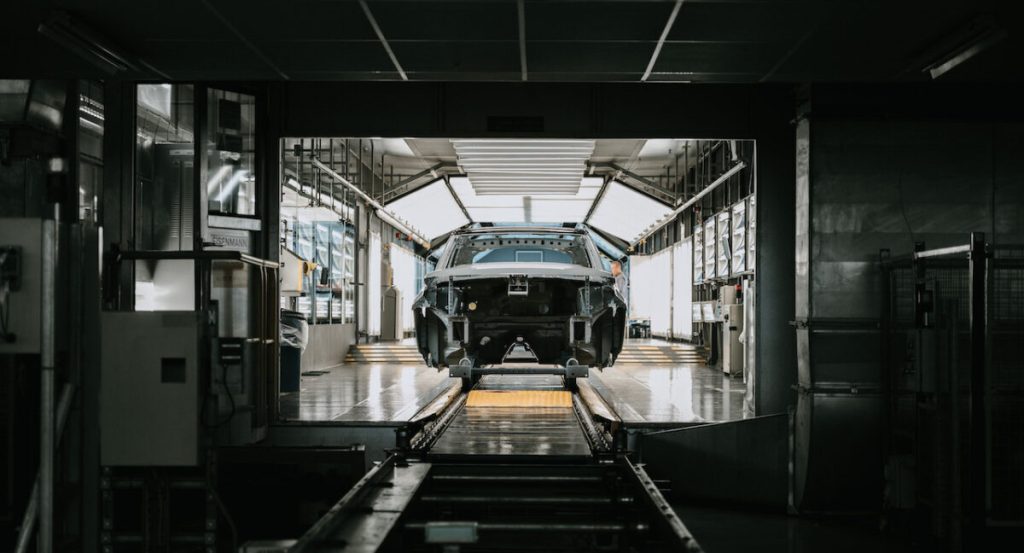
UK-government backed proposals indicate that Chery is in talks to use a domestic Jaguar Land Rover plant to produce its own branded cars, three sources familiar with the matter have told the Financial Times. Set to be discussed during Prime Minister Keir Starmer’s visit to Beijing next week, the development would mark the UK’s latest step in a years-long effort to win the Chinese automaker over to British vehicle production.
Negotiations remain at an early stage and many details remain under discussion, although Chery and JLR will hold exploratory talks during Starmer’s China visit to China—the first by a British prime minister in eight years. Business Secretary Peter Kyle acknowledged the government wanted Chery to manufacture in the UK, telling FT that “if there is a manufacturing facility where there is sort of undercapacity, then there is a logic to forming partnerships and that could well form one of them”.
A new JLR deal with Chery will be an important step in the UK government’s efforts to reverse the trend of diminishing domestic vehicle production. It aims to hit a target of 1.3 million vehicles produced annually in 2035; the Society of Automobile Manufacturers and Traders expects the country to have produced less than 740,000 in 2025. The UK hit a recent peak with 1.7 million vehicles in 2016—subsequently collapsing in the wake of Brexit, Covid-19 and a variety of other geopolitical events—but its all-time high was in 1972 at 1.92 million units.
In 2025, Chery’s Omoda and Jaecoo marques were the fastest-growing Chinese brands in the UK, prompting the automaker to introduce its titular marque there over the summer. The Chery brand went on to sell 3,930 units in the country between 1 September and 30 November, capturing 0.9% market share. Other Chinese automakers like BYD and Xpeng have also set up shop in the UK to great success, in part due to substantially lower duties than in neighbouring mainland Europe or North America.
People close to Chery have previously cited high energy and labour costs as the main hurdle to producing locally, though Omoda executives have not ruled out a wholly new UK plant and are seeking to build extra capacity. Ventures between global automakers and their Chinese rivals remain relatively rare outside of China proper—Changan-Mazda being a noteworthy exception—although manufacturing tie-ups in Europe are likely to increase as local automakers struggle against sluggish demand and high production costs. Chery already owns a Barcelona plant acquired from Nissan, and reached an agreement on 23 January to purchase the struggling OEM’s facility in South Africa.
JLR and Chery have a long history of partnership, establishing a Chinese joint venture together in 2012. The two have strengthened their ties in the intervening years, with JLR agreeing in 2024 to license its Freelander brand to Chery for developing electric vehicles (EVs) via the latter’s platform.
At a broader level, Starmer’s China visit will serve as an attempt to thaw relations as the UK navigates a volatile US and a growing willingness among other NATO allies to deepen their ties with Beijing. Canada’s recent pivot towards “pragmatic” engagement with Beijing, for example, will see it lower duties from 100% to just 6.1% on up to 49,000 Chinese-made EVs annually.
E-Mobility,Manufacturing,Markets,News,OEMs,Chery,Stewart Burnett,Tata MotorsChery,Stewart Burnett,Tata Motors#eyes #Chery #deal #JLR #plants #production1769441438
More Stories
Pony.ai, CATL partner on first L4 electric light truck
UK lays regulations for automated passenger services
Leapmotor reveals China-only B05 Ultra at Beijing show