




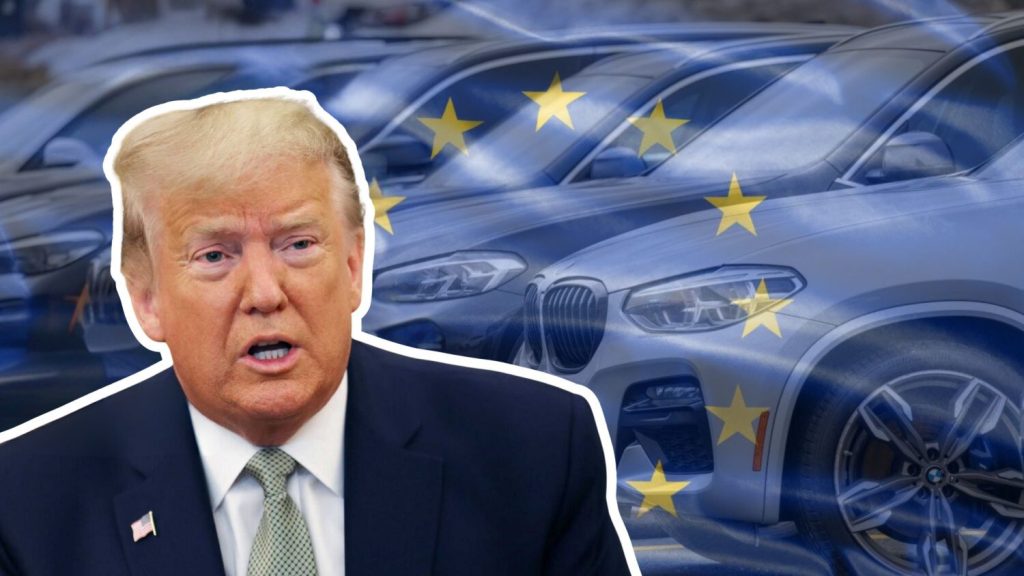
Investors react after President Trump signals higher U.S. tariffs on European imports tied to Greenland dispute.
On the Dash:
- European auto stocks fell sharply after Trump threatened new U.S. tariffs to take effect on Feb. 1.
- Automakers are already facing trade, China, and EV headwinds, which could see billions in earnings impact.
- The tariff dispute risks escalating trade tensions between the U.S. and the EU.
European automaker shares fell Monday after President Donald Trump threatened new U.S. tariffs on imports from several European countries, reviving trade tensions and adding pressure to an industry already grappling with slowing demand and rising costs.
Shares of BMW, Mercedes-Benz, and Porsche dropped more than 3% in early European trading, with losses at times exceeding 6% for Mercedes and 7% for BMW. Meanwhile, Volkswagen, Ferrari, Volvo Car, Aston Martin, Renault, and Stellantis also declined, by 1.5% to 5% on average.
Over the weekend, Trump said the U.S. plans to impose a 10% tariff on goods imported from Denmark, Norway, Sweden, France, Germany, the United Kingdom, the Netherlands, and Finland, effective Feb. 1. The tariff would increase to 25% starting June 1.
The proposal is tied to the President’s efforts to pressure Denmark amid a dispute over Greenland.
Sign up for CBT News’ daily newsletter and get the latest industry stories delivered straight to your inbox.
However, it remains unclear whether the new duties would be layered on top of existing tariffs. Automakers importing vehicles and parts from the European Union are already subject to a 15% U.S. tariff, following earlier changes that raised duties from roughly 2.5%. In the U.K., a 10% tariff applies to the first 100,000 vehicles exported to the U.S., with volumes above that threshold facing a 27.5% duty.
Analysts warned that additional tariffs could seriously influence profitability. Bloomberg Intelligence estimates the latest measures could reduce annual earnings for German, British, and Swedish automakers by about 3 billion euros. German manufacturers are especially exposed because the U.S. remains a key market for high-margin imported models.
The renewed tariff threat compounds existing challenges for Europe’s auto sector. Carmakers are facing weaker sales in China, intensifying competition from domestic Chinese brands, and a slower-than-expected transition to EVs, prompting some companies to scale back earlier electric targets.
While the European Union weighs potential retaliation, EU officials said they could impose tariffs on up to 93 billion euros of U.S. goods if President Trump follows through on the plan, further escalating transatlantic trade tensions.
Global Industry News,Articles,Headlines,Trump’s Tariffs,automotive tariffs,President Donald Trump,car business,Retail Automotive,auto industry#Tariff #tensions #return #Trump #targets #European #imports1768913539


More Stories
Weekly roundup: FTC wants dealers to report deceptive pricing, Ford boost U.S. assembly, Carvana expands dealership portfolio
Autonomous future back in focus as Waymo expands, Uber reinvests billions
New car sales drop 7.3% in April, but don’t blame buyers