
BYD joins an increasingly crowded field of Chinese OEMs staking out a claim for robotaxi leadership. By Stewart Burnett
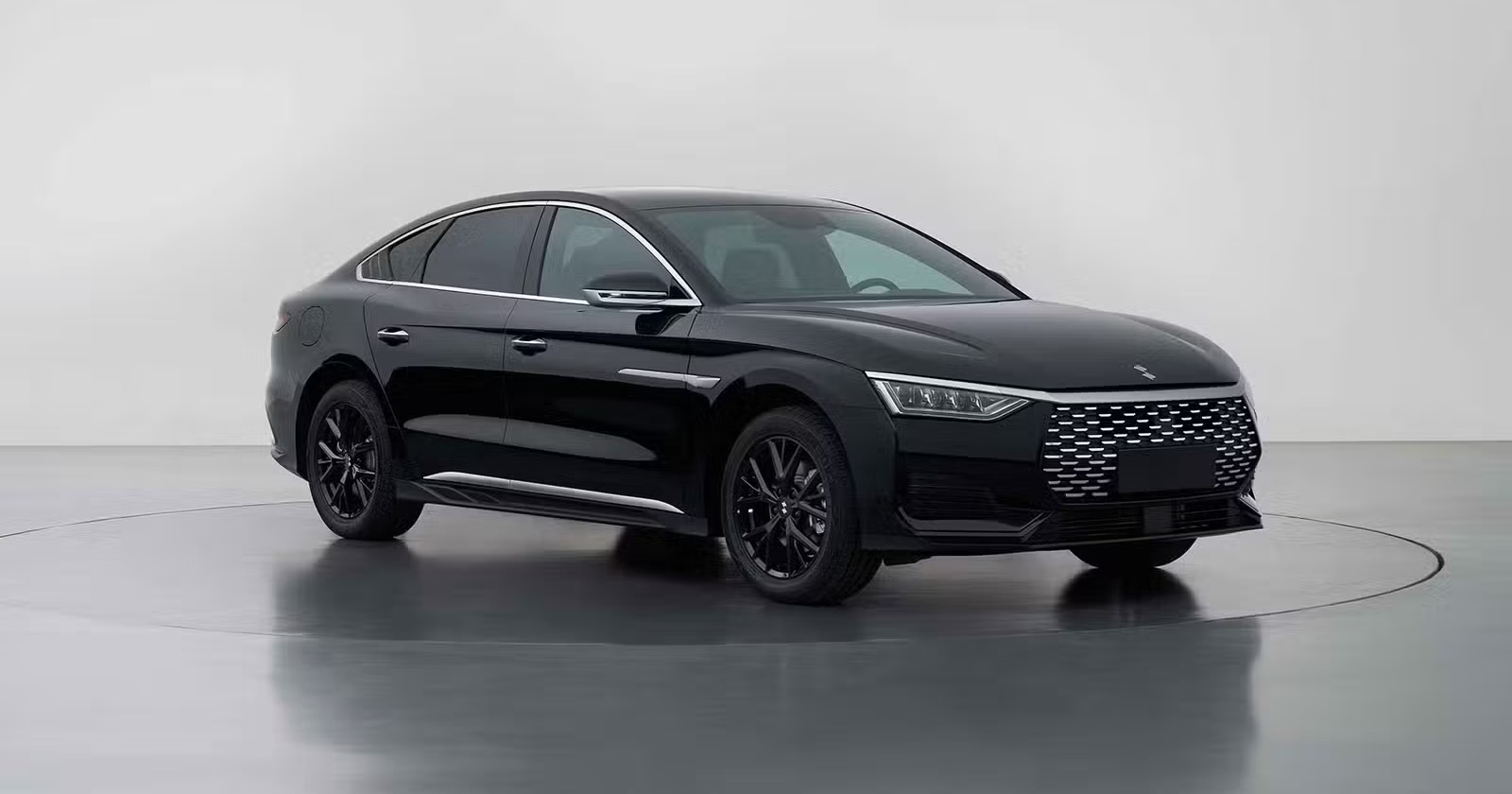
BYD has established a sub-brand called Linghui which specifically targets China’s ride-hailing market, filing four models with the Ministry of Industry and Information Technology on 8 January. The models Linghui e5, e7, e9 and M9 each bear a distinct new logo, although the electric vehicle maker has not formally announced the brand to media outlets.
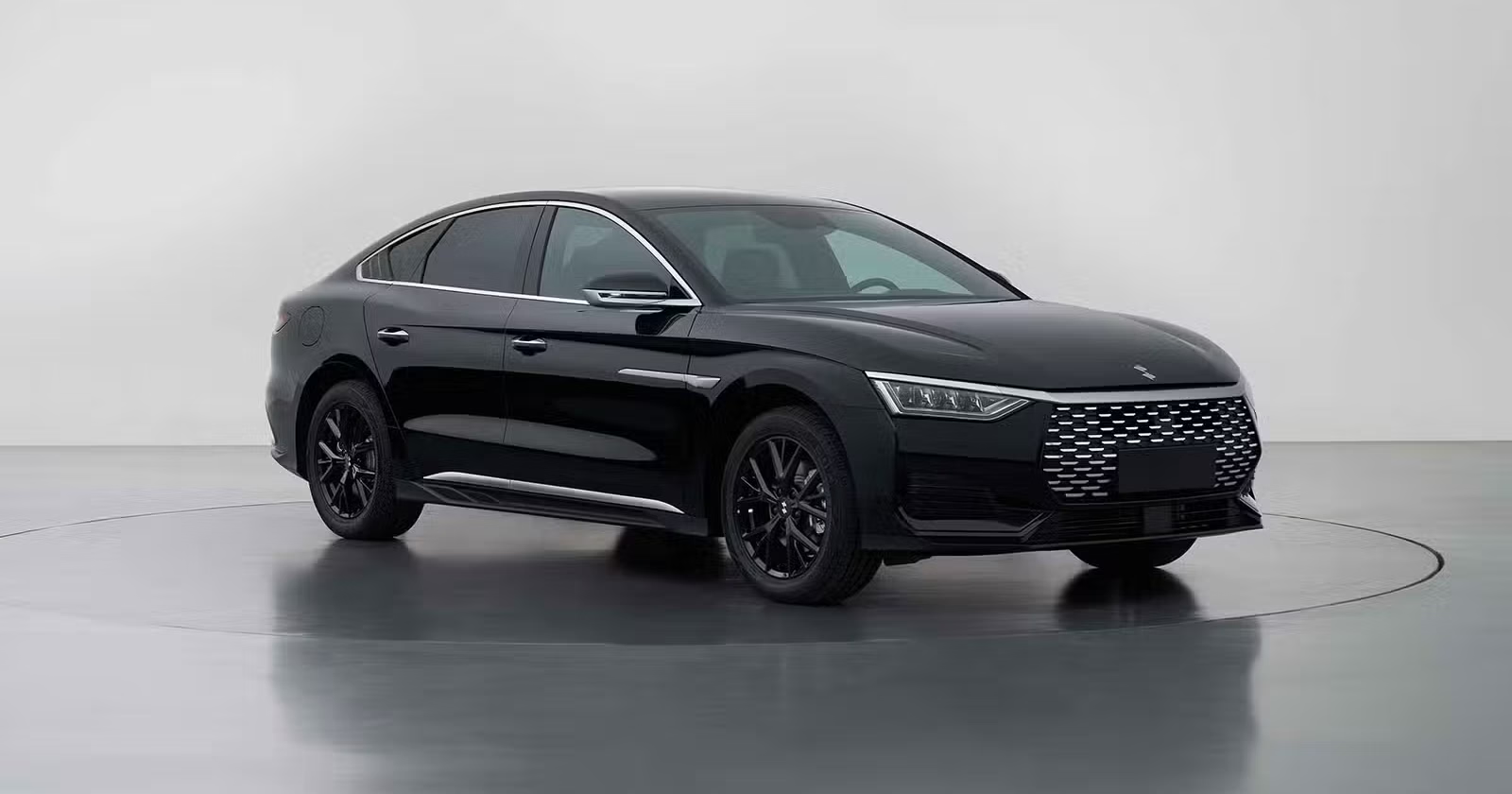
All four vehicles appear to be rebadged versions of existing BYD models adapted for autonomous mobility operations. The Linghui e9 is based on the Han sedan, while the e7 derives from the Sealion 06 EV, the e5 from the Qin Plus EV, and the M9 from the Xia multi-purpose vehicle with dimensions.
This is not BYD’s first foray into autonomous mobility. The automaker currently serves the robotaxi segment through e-series models placed under its commercial vehicle division. Among these are the e7 electric sedan launched in May 2025, which startins at CN¥103,800 (US$14,400). Indeed, BYD already offers a range of affordable models that have become preferred choices for ride-hailing operators due to operational efficiency. However, its growing association with ride-hailing and the affordable end of the market could negatively impact brand perception as it explores luxury markets through its Yangwang and Denza divisions.
The independent Linghui sub-brand addresses this image challenge by separating fleet operations from consumer-facing brands. Apparently an exclusively B2B marque, it is the fifth under the BYD Auto umbrella alongside luxury brands Denza and Yangwang, the off-road-focused Fangchengbao, the marine-themed Ocean series targeting younger buyers, and of course the titular BYD.
A rebadging strategy is a low-cost way to achieve brand differentiation, but it remains to be seen what distinguishes the vehicles at the hardware level. Whether they use the same sensor systems as the God’s Eye technology already in current-generation BYD cars—or whether they have improved durability or safety features—are currently unclear. It does, however, indicate that robotaxi sales are expected to become a significant portion of the automaker’s business in the coming years.
BYD joins an increasingly crowded field of Chinese automakers trying to carve out a piece of the still-nascent robotaxi industry. Many are pursuing their ambitions through partnerships: for example, Geely’s collaborations with Waymo and Pony.ai, or GAC’s joint venture with Didi. Xpeng is following in the footsteps of US counterpart Tesla by deploying camera vision-only robotaxis based on AI technology developed in-house. BYD, for its part, has invested in LiDAR supplier Robosense, but is developing its own proprietary autonomous driving solutions.
News,BYD,Stewart BurnettBYD,Stewart Burnett#BYD #creates #Lingui #marque #robotaxi #fleets1768017019
More Stories
Pony.ai, CATL partner on first L4 electric light truck
UK lays regulations for automated passenger services
Leapmotor reveals China-only B05 Ultra at Beijing show